
A Meal with the King
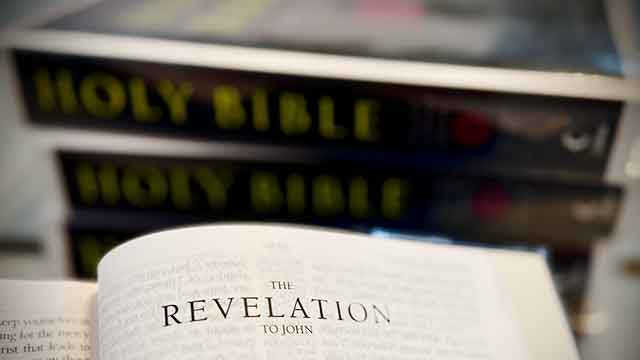
Revelation 3:20
20 Behold, I stand at the door and knock. If anyone hears my voice and opens the door, I will come in to him and eat with him, and he with me.
This transcript has been automatically generated
Well, first of all, I think we owe you an apology for dislocating you so much this morning and making it impossible for you to go to your usual place for lunch, which is an opportunity to say that there are 9 spare soup lunches. Perhaps it’s a good thing that they’re not all taken up because there’s so little room, but they will still be over there where Stephen is sitting, and the sandwich lunches I think are still over there at the far corner of the church, and the coffee is still here. But again, I apologise that there is less room. I think my only other notice is to say that it’s in a very good cause, and you’ll see some outward and visible signs of their good cause in that tree up there covered with flowers. I hope very much that you will find time to come at 7 o’clock one evening this week before Friday when it closes.
I don’t think I knew what to expect, and I was very greatly excited, indeed thrilled, with what I heard and saw on Sunday night, and I’m going to be there again tonight. It really is a splendid production showing the birth of Christ, and if anything, I think I prefer the lunchtime theatre even to that. That’s on Monday, Wednesday, and Friday this week, so there are only 2 left. We have it in the chancel here Wednesday 1 o’clock, Friday 1 o’clock. The idea of that is to show the kind of thing that these young people are putting on in streets outside pubs, in places where people know nothing of Jesus Christ and they show the storeys and truths of the Christian gospel in drama and I must say I thought it was most gripping and in the chancel even in the slightly difficult circumstances it came across in the lunch hour.
Well now if you take your Bible, I hope you’re near one, it’s one of the marks of Tuesdays that we open our Bibles and we see very well that the preacher keeps to his text. And doesn’t wander in the time that he has. And we’re going to look at the generosity of God again in verse 20 of Revelation chapter 3, which is certainly a verse that we’ve looked at before. I was greatly struck by the phrase in Psalm 100 in the prayer book version this weekend: Speak good of his name. And I suppose this is what my privilege is on Tuesdays, it is to try to speak good of his name.
To point you away from yourselves. It’s rather a relief, that, isn’t it, in the middle of the day and in the middle of the week, and to look at God and try to get a glimpse of why he’s so great, why he is so well worth knowing, if we may put it like this, why we should worship him and why we should serve him. And what we’re looking at until the middle of February is just one attribute of God, though it’s one of his greatest, and that is his generosity. Now one or two of you have been intrigued by the verses that I’ve chosen because of the little phrase, the God who, and you remember we looked first at James chapter 1 verse 5, wasn’t it, where we saw that God was the God who gives to all men liberally and upbraideth not. And in particular the gift of God generously given there was the gift of wisdom to those who know that they haven’t got it.
Since the modern world is by and large conceited concerning its ability to run its affairs, And only now perhaps in the ’70s beginning to be humbled afresh. Very few people have learned the generosity of God because they don’t turn to him. Then last Tuesday we looked at 1 Timothy, the God who richly furnishes us with all things to enjoy, and we found in that remarkable passage addressed to rich men that they don’t get a good bashing as rich men can be, get if they listen to many a trendy preacher today, but the New Testament tells them that the good things they have are theirs to enjoy and to share with others. Now if I was actually to choose another God who verse, and I’d like you to keep your finger in Revelation 3, but I want to keep up this, uh, sequence, this succession, I would choose Ephesians chapter 2 verse 4, which in the big Bibles is on page 181.
And it’s a little tiny phrase but a very lovely one where we read this. Don’t worry about the context at the moment, it’s just a description of God.
But God who is rich in mercy, out of the great love with which he loved us even when we were dead, made us alive. By grace you’ve been saved. The God who’s rich in mercy. This morning George Best was mentioned on the radio news. I forgot what about.
Now, if you said to me, who is George Best? Fortunately, I know. I would say to you, George Best is the footballer who is always having a tantrum. Or perhaps I could say worse things. Now, if you’ve gone up to a Bible writer and you say, what is this God you’re talking about?
He would have said, he is the God who— and he would have given you these sentences which differentiate the God he’s come to know from all the gods of the heathen all the gods of comparative religion today as well. He is the God who is rich in mercy. God supremely is wealthy in this attribute of mercy. Now that is simply to say that God is a God of grace and of course I’m bound to get here fairly soon if I start talking about the generosity of God, for the generosity of the God of the Bible is chiefly shown by his grace to men. This will sound very sweeping to you, you know, but I think it’s possible to say that you can know whether a person is a Christian by one word.
Do they understand the word grace or not? You remember that rather quaint storey in the book of Judges where the, I’ve forgotten, it was the Gilead, the people of Gilead, wasn’t it, who were fighting the people of Ephraim and it came to nighttime and they took the commanding places over the river. And when people crossed the bridge and they wanted to find out whether it was foe or friend, they simply said, say Shibboleth, because apparently the Ephraimites couldn’t say their SHs. They couldn’t say sh— you know what. They couldn’t do Shibboleth.
So as they came over, and because they had no lights or anything like that in a dark stormy night, the Gilead— people of Gilead simply said to a man as they held him before he went across the bridge, say shibboleth and he would say sibboleth and they’d kill him and then he was out of it.
Now let’s look at this word grace. What does it mean? The religion of the Bible is a religion of grace and if you don’t really know what grace means, do you understand the Bible? I’ve tried to put down a definition of grace, so many people have tried and this is certainly not a better definition but this will go, I think, for Uh, it’s as good as I can do. The extraordinary favour of God freely given to undeserving people.
The extraordinary favour of God freely given to undeserving people. There are great many, a great many passages that we could look at in our short lunch hour to illustrate that great phrase, grace. Great truth. But I’m going to look at an old passage this morning, partly because it is acted and mimed by the Upstream production company here in the Luncheon, and I want to show you what wonderful generosity and grace is shown by this letter to Laodicea.
It’s Christ’s grace and undeserved favour to a church which has forgotten him and is without his presence. It’s a rather terrifying letter and I sometimes wonder what the presiding elder of the church of Laodicea must have felt as he opened that letter or as he heard it spoken. Sometimes as an incumbent I get unpleasant letters, sometimes these unpleasant letters say things that are truthful as far as they go in criticism of this church. I know I don’t like getting them, I’m sure you don’t either. Usually I read them as fast as I can and don’t read them again.
But since this letter comes from the risen Christ, the presiding elder presumably read it again, and as he read it again, he’d have seen that beyond the stern words of truthfulness, frankness, there is marvellous grace.
For this risen Christ who writes to this church and shows them that they are without life and without power and without the presence of God, Then says to them in verse 20: Look, I’m standing at the door of your church and I’m knocking, I want to come in. If anyone opens, hears my voice and opens the door, I’ll come in and eat with them. Now let’s just look at that in terms of my description: extraordinary favour freely given to undeserving people. First, extraordinary favour. What is the extraordinary favour that Christ is offering these people as he offers it to us today?
And that can be put quite simply, it’s his presence.
Now my friends, if the church of Christ is without the presence of Christ as it so often is in the 20th century in the Western world, then it is a very pitiful thing indeed, isn’t it? Sometimes we try to fill the gap by the parson preaching politics or the people exercising themselves simply in social activities, but usually in the end it leads to an empty church because the church without Christ is a hollow thing.
And what Christ is doing here to this, this church is to offer them an extraordinary favour, his presence. You remember the disciples in the upper room, conscious that Jesus was going to leave them, beseech him not to and they say, you’ve given us your teaching, you’ve given us your promises, you’ve told us what we’re to do, to go out into all the world but quite frankly we can’t do it without you.
And he promises to be with them and to give them his presence. That’s the secret, isn’t it? Somebody said recently, I go on coming on Tuesdays, I don’t know really what you’re talking about but there’s something I come for which I haven’t got. Well, let me tell you what that is. It’s not Christian theology or philosophy as such, it is the presence of Christ.
Now I’m so thankful that this is described in such non-religious terms. Look again at verse 20, I know it’s familiar but do you see how how unreligious it is. If this man opens the door, if this church opens the door, I will come into him and eat with him and he with me. We will have a meal together.
Jesus does not say, if you open the door I will come in and pray with you or I will come in and teach you about God. Then no doubt he will do all these things.
He comes in to have a meal. Why do you ask somebody to have a meal? I have some cousins who’ve come from Australia, they very kindly asked me to a meal on Thursday. And I’m very disappointed that I can’t go because when we get to, get to know new people, especially relations, we want to get to know them better. And where do we get to know them better?
Well, by asking them into our houses to have a meal.
And this is the language of the New Testament, you see, it is not religious language. Christ says, I want to come into your life to be your friend. It’s an extraordinary favour. Imagine some very famous person, even perhaps Her Majesty the Queen, writing you a letter and saying that she wants to come and have a meal in your house. What a privilege!
For anybody to offer a meal these days is pretty generous, isn’t it, with the price of food? I reckon any invitation these days is a generous thing. And Christ is generously opening his heart, opening his presence to us, telling us to come in.
An extraordinary favour, the presence of Christ freely offered. Now what do I mean by freely offered? This is indeed splendid news. I want you, I think, to turn back if you will to Luke 19. I would like to have chosen this as the lesson but I couldn’t have 2 today in the time we’ve got.
But it’s a very familiar storey and you probably remember it of this rich but very wicked man Zacchaeus, who’d grown fat and wealthy in his evil ways, and how he began to hunger to see Jesus. I was reminded of this storey during the play on Sunday night as somebody climbed up into that tree and appeared halfway up it, and it must have been a very quaint sight, wasn’t it, to see this portly middle-aged tax collector in his Savile Row suit scrambling up a tree in order to catch sight of Jesus because he was so short he couldn’t see over the crowd.
And when Jesus came to the place, he looked up and said, Zacchaeus, hurry up, come down, for today I want to live in your house.
Now I call that a free offer in the sense that God is not pressured into making it. God is sovereign, Jesus is sovereign, he can do what he likes. Uh, supposing Jesus had, um, looked up and said to the angels, angels, can I have a conversation with Zacchaeus? I want to go to his house today. Is he the sort of man that I ought to have dealings with?
You’ve known him, you know what he writes in his account books, you know what he’s been like since he was a young man, went into business. And the answer comes back from the angels, Lord, don’t have anything to do with him. He’s an evil person. You’ll ruin your reputation.
Well, supposing Jesus has sent a message to the family, Mrs. Zacchaeus and Master Zacchaeus and Miss Zacchaeus, who’s just coming out for her season as a deb, and the message comes, Jesus says, may he have dealings with your father. Of course, you must remember that when he has dealings with people, he tends to revolutionise their lives, and it may mean that the 3rd car will have to go and you’ll have to move into a smaller house.
The message comes back from Mrs. Zacchaeus, you leave my husband alone, he’s perfectly all right as he is, and we’re all quite happy, thank you, with our lifestyle.
Well, supposing the disciples had had what is so popular today, a referendum. They’d gone around with pieces of paper and they’d asked the crowd, shall Jesus have anything to do with this particular man Zacchaeus? Will you tell us? Well, actually the answer is in verse 7, isn’t it? When the crowd saw it, they all murmured, he has gone in to be the guest of a man who is a sinner.
You know, the kind of thing that goes on. Dreadful, isn’t it? You can’t quite hear it. Nobody’s actually got the boldness to say it out loud.
But the mutter is going around the crowd, I don’t know what he’s doing with a man like that, he can’t know very much about him, he can’t be the Messiah if that’s how he behaves. Now the freedom of God, the sovereignty of Christ is shown that he’s not under pressure. We are under pressure. When you go to business in the morning you have to do what your boss asks you to do. However great a man you may become, you’re under pressure from various ways, even if it’s only your wife or circumstances around you.
But may we say it with reverence that Jesus is free to do what he likes and therefore he is free to have dealings with you and with me and isn’t that a great relief because if we are honest we want to say, well, there is nothing very much that he can do with me.
I was going to say freely offered but actually I changed my definition, if you remember, to freely be given because Jesus doesn’t simply come and freely offer his friendship, he freely gives it. That is to say that the word of Christ is not simply an offer that stands there and I can take it or leave it. It is a power that gives me the ability to stand up this very day and answer it. You remember Jesus standing outside the tomb where Lazarus is. I think it’s a wonderful storey and he stands there, you remember, We’re told by the writer that the body stinks because it’s been there 4 days in the heat.
Christ says, Lazarus, come forth. He doesn’t say, Lazarus, would you get up please, take off your grave clothes, roll away the stone, it’ll be rather difficult for someone as weak as you are, and please put on some ointment when you come out. He doesn’t say anything like that. He simply says, Lazarus, come forth. And the dead man gets up and comes forth because the word of Christ is unlike any other word of man.
A politician may say, do this, we don’t necessarily do it. When Christ says it, we have the power to do it. So the extraordinary favour of God is freely given to people. He is sovereign, he may give to whom he likes and he chooses, and this is the marvel of the Christian message, to give it to those who know themselves to be undeserving. Like Zacchaeus.
Now let’s turn back to our Revelation 3 and as I close I want you to show, to show you that this church was undeserving, just as undeserving as Zacchaeus who presumably was a pagan. Doesn’t very much matter whether we’re outside or inside the church, this message today is for us.
And I think this letter brings out, I’ve often read it before but I don’t think I’ve noticed it so strongly until today when I saw how it brought out the undeserving character of this church. You see verse 16, so because you are lukewarm and neither cold nor hot. I thought Ian’s modern translation, I don’t know what it was that he read, brought that out very powerfully, neither cold nor hot. What does that mean? Well, Uncle Jack writes to his rather idle nephew and he says that he will set him up in business and he will give him some money as capital and he gets no reply.
So in the end, he telephones his nephew and he says, did you get my letter, my offer? Do you want my money so that you can get into business? Don’t mind if I do, Uncle Jack. Don’t mind if I don’t.
Neither one thing or the other. Neither cold nor hot.
The message comes from Christ. Are you interested in what I have to say to you this very day, Tuesday the 20th of January? Are you enthusiastic to do what I tell you this day? Well, I’m not sure I’m enthusiastic, Lord. Well then, are you cold?
Are you against me? Oh no, I’m not against you. Then what are you? Lukewarm, careless, indifferent, apathetic.
And the second mark of this church is not only were they careless, they were content as they are. And it’s very pitiable, isn’t it, when they say, we’re rich, prospered, we need nothing, and they know not that they’re wretched, pitiable, poor, blind, and naked. I couldn’t think of an illustration for this. All I could think of is the rather unlikely situation of going into a lunatic asylum and meeting someone there who thinks that they’re very rich, and as we come out from talking to them, we just feel pity in our hearts for them.
And surely as God looks down and sees church or people who think that they are rich and yet don’t know him, he has infinite pity for them.
Now that’s the church to which Christ comes. They’re quite careless, they’re content to be as they are, they don’t want him, they’re not seeking for him, they’re not thankful. I was going through my list of godsons, godchildren, I have so many I can’t remember them and I found that one hadn’t said thank you for my present for 3 years running so I’m wondering whether to strike him off my list. I think I shall have mercy on him because I know what a spot it is to write those thank you letters. But I suppose we look for something, don’t we, to show that it’s arrived at least.
And the marvel of the gospel is that God in a real sense looks for nothing except a recognition that what he says, his diagnosis is true.
Zacchaeus, hurry up, come down out of that tree for today I will abide in your house. Let me finish by saying that there’s a great peril in preaching as I’ve done this morning. Always when one tells the storey of grace, there is a great danger that people, especially Englishmen, will be lulled into a false security. Directly you mentioned the mercy of God, people almost always presume upon it. That is, they say, oh, that’s good, I thought that was the message.
I was getting really rather alarmed at what this man says on Tuesday, but well, yes, I’ve always believed God is merciful. And so they put down the their concern. They go away, they say tomorrow will do. I think it’s important to say that whenever the grace of God is mentioned in the New Testament there’s always a note of urgency. Zacchaeus, come down this day.
Grace demands instant submission, prompt obedience.
Jesus was to pass through Jericho and not to come again. Again with this church in Laodicea, behold I stand at the door and knock. Today if you will hear his voice, harden not your hearts.
The grace and the generosity of God is shown in the fact that he will deal with you and he’ll deal with me, that he knocks on the door, that he will come in. You say, how do I open the door?
Well, I suppose it’s simply to say something like this: Lord Jesus, in your mercy, enter the house of my life and take control. I’ve never really asked you that before, but please do it this very day. How do I know that he will come into my life? Because of his promise: If any man, old or young, open the door, I will come in. How do I know if he has come in?
Well, you’ll know by many signs of life, and one of the signs of life incidentally is a new generosity that God puts into your heart as he put it into the heart of Zacchaeus. Who when he went home, you remember, with a changed heart said, behold, half of my goods I give away and if I’ve defrauded anybody, fourfold. Let’s pray.
God who is rich in mercy, we thank thee, Almighty God, that that is the supreme jewel in your crown.
We thank you for your mercy and grace shown to men. We thank thee that the worst of men can glory in it and the best.
We thank you that you are merciful to the outsider and to the insider. And so have mercy upon us this day. Grant that we may open that closed door and discover this new life. Through Jesus Christ our Lord. Amen.