
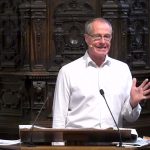
This talk from 1 Thessalonians addresses sex, society, salvation, and spirituality.

elementor domain was triggered too early. This is usually an indicator for some code in the plugin or theme running too early. Translations should be loaded at the init action or later. Please see Debugging in WordPress for more information. (This message was added in version 6.7.0.) in /mnt/customers/customers-bh-108dcf/575c8d22-9e37-4570-b449-7bc62225f920/wp-content/wp-includes/functions.php on line 6260

This talk from 1 Thessalonians addresses sex, society, salvation, and spirituality.
11 Now may our God and Father himself, and our Lord Jesus, direct our way to you, 12 and may the Lord make you increase and abound in love for one another and for all, as we do for you, 13 so that he may establish your hearts blameless in holiness before our God and Father, at the coming of our Lord Jesus with all his saints.
Finally, then, brothers, we ask and urge you in the Lord Jesus, that as you received from us how you ought to walk and to please God, just as you are doing, that you do so more and more. 2 For you know what instructions we gave you through the Lord Jesus. 3 For this is the will of God, your sanctification: that you abstain from sexual immorality; 4 that each one of you know how to control his own body in holiness and honor, 5 not in the passion of lust like the Gentiles who do not know God; 6 that no one transgress and wrong his brother in this matter, because the Lord is an avenger in all these things, as we told you beforehand and solemnly warned you. 7 For God has not called us for impurity, but in holiness. 8 Therefore whoever disregards this, disregards not man but God, who gives his Holy Spirit to you.
9 Now concerning brotherly love you have no need for anyone to write to you, for you yourselves have been taught by God to love one another, 10 for that indeed is what you are doing to all the brothers throughout Macedonia. But we urge you, brothers, to do this more and more, 11 and to aspire to live quietly, and to mind your own affairs, and to work with your hands, as we instructed you, 12 so that you may walk properly before outsiders and be dependent on no one.
13 But we do not want you to be uninformed, brothers, about those who are asleep, that you may not grieve as others do who have no hope. 14 For since we believe that Jesus died and rose again, even so, through Jesus, God will bring with him those who have fallen asleep. 15 For this we declare to you by a word from the Lord, that we who are alive, who are left until the coming of the Lord, will not precede those who have fallen asleep. 16 For the Lord himself will descend from heaven with a cry of command, with the voice of an archangel, and with the sound of the trumpet of God. And the dead in Christ will rise first. 17 Then we who are alive, who are left, will be caught up together with them in the clouds to meet the Lord in the air, and so we will always be with the Lord. 18 Therefore encourage one another with these words.
Now concerning the times and the seasons, brothers, you have no need to have anything written to you. 2 For you yourselves are fully aware that the day of the Lord will come like a thief in the night. 3 While people are saying, “There is peace and security,” then sudden destruction will come upon them as labor pains come upon a pregnant woman, and they will not escape. 4 But you are not in darkness, brothers, for that day to surprise you like a thief. 5 For you are all children of light, children of the day. We are not of the night or of the darkness. 6 So then let us not sleep, as others do, but let us keep awake and be sober. 7 For those who sleep, sleep at night, and those who get drunk, are drunk at night. 8 But since we belong to the day, let us be sober, having put on the breastplate of faith and love, and for a helmet the hope of salvation. 9 For God has not destined us for wrath, but to obtain salvation through our Lord Jesus Christ, 10 who died for us so that whether we are awake or asleep we might live with him. 11 Therefore encourage one another and build one another up, just as you are doing.
12 We ask you, brothers, to respect those who labor among you and are over you in the Lord and admonish you, 13 and to esteem them very highly in love because of their work. Be at peace among yourselves. 14 And we urge you, brothers, admonish the idle, encourage the fainthearted, help the weak, be patient with them all. 15 See that no one repays anyone evil for evil, but always seek to do good to one another and to everyone. 16 Rejoice always, 17 pray without ceasing, 18 give thanks in all circumstances; for this is the will of God in Christ Jesus for you. 19 Do not quench the Spirit. 20 Do not despise prophecies, 21 but test everything; hold fast what is good. 22 Abstain from every form of evil.
23 Now may the God of peace himself sanctify you completely, and may your whole spirit and soul and body be kept blameless at the coming of our Lord Jesus Christ. 24 He who calls you is faithful; he will surely do it.
25 Brothers, pray for us.
26 Greet all the brothers with a holy kiss.
27 I put you under oath before the Lord to have this letter read to all the brothers.
28 The grace of our Lord Jesus Christ be with you.
This transcript has been automatically generated
Let’s look at chapter 5 of Thessalonians, 1 Thessalonians.
I mean, verse 27, I’m not going to say much in the talk, just before we pray, I thought it would be helpful to look at it. Verse 27 is a fascinating verse, isn’t it? It, I think, has a lot to say about Paul’s— remember, it’s 50, 51 AD, He has just said, test everything, referring to prophetic words in verse 20. And now verse 27, he says, I put you under oath before the Lord to have this letter read to all the brothers. So, he doesn’t actually stress his apostleship in the letter really, but he is very clear of his apostleship.
And he’s saying, I mean, his own view of his own word is pretty striking, isn’t it? You must read this out, and I give you this charge before the Lord. So, if we’re engaged in an apostolic ministry, then insofar as we are in line with the apostolic word, so far do we have this living word that creates the kind of churches we were hearing about yesterday. Let me lead us in prayer. Father, we do thank you for your living word that you have spoken, and we thank you for your living word to this baby church, and we pray that you would use your living word by the power of your Spirit to address each one of us in the ministries you’ve entrusted to us today.
For your name’s sake. Amen.
Now, I don’t expect we failed to notice the widespread trumpeting of the demise not only of the Christian faith in the United Kingdom but also of the Church of England. It’s hardly news, but every evidence of the retreat of Christianity in the UK is pounced upon by the secularist media as they conduct on a feeding frenzy of the scoop. And last week, it was the Times who conducted their survey and announced, Britain isn’t a Christian nation now, say the clergy. It was actually front-page stuff. I don’t take— newspapers are so expensive, I don’t take them now.
But I thought, well, I’ll go and actually buy it and read it for myself, but there was nothing really new in it. Initial figures supplied by the Office of National Statistics survey and completed some time ago now tell us that we’re no longer a majority Christian country, and the clergy apparently have now realised that. And I don’t think that’s surprising. For decades, nominal Christianity has been the norm, and the actual number of real Christians is probably little changed. But that Britain is no longer majority Christian or is barely Christian places us, I think, increasingly in the position of the Apostle Paul as he pioneered new territory into what we call Europe today, pagan Macedonia.
The customs and the worldview and accepted moral outlooks of what is right and wrong are now profoundly unchristian. And I’ll come back to this at the end of the talk when we will hear from Rod Liddle, who’s going to preach to us for a moment. Now, this makes, I think, the letter extraordinarily relevant. I suggested yesterday that Paul’s stay in Thessalonica was much longer than the 15 days suggested by many. And I suggested yesterday that the so-called defence of Paul’s ministry in chapters 1 to 3 is much less a defence against opponents seeking to malign him, I don’t think there is much evidence of that, much more an outlining of the genuine work of God that has been established by the genuine gospel worker.
The affliction that the Thessalonians suffered I think, was just normal affliction, like every other church experienced. And the ministry Paul exercised was authentic God-ordained ministry of the genuine gospel worker. And the result in this key city port, the second Rome, as Thessalonica is described, the centre of pagan life, was a true work of the living God. But how are they, as an outpost, if you like, of God’s kingdom, in the heart of the Roman Empire to live. We suggested yesterday that what Paul was doing with this baby church in the absence of his normal return visit, which Satan prevented him from, what he was doing in writing was laying out what he would have covered simply by being there in normal circumstances.
This is what the new church formed, the fresh believers gathered, needs to hear. Yesterday, you are the real McCoy. The ministry was the real McCoy, and your standing demonstrates that you are the real McCoy. And I think the young Christian needs to hear that just as much today as the young Christian in the pagan environment needed to hear it in the first century. And that’s why I think 1 Thessalonians is such a wonderful letter for us to be doing in our one-to-ones, teaching to our young congregations, and in the youth groups and so forth.
Now in the second half of the letter, Paul goes on to cover what the new believers gathered need to hear. The material, you, I’m sure, know, is bracketed by 2 prayers. The first prayer is at the end of chapter 3, verses 11 through 13, and the second prayer is at the end of chapter 5. I want us to begin by looking at these because I think the first prayer is the hinge of the letter.
So, Paul has just said, chapter 3, verse 8, and I think this is his driver, now we live if you are standing fast in the Lord. I mean, that’s a one, you know, reading this on holiday is so good because you are saying to yourself, William, is that really, now we live if we are sitting on the beach? Now we live if we are catching a fish? No, now we really live if you are standing fast. And if you look at the end of chapter 2, you’ve got this, what is our hope or joy or crown of boasting before our Lord Jesus at His coming?
Is it not you? For you are our glory and our joy. And we talked yesterday, right at the end, about the enemy in the works, Satan who tempts, Satan who prevents the travel, Satan who causes the affliction. We talked about the enemy. We talked about the emotion in the work, and that centrepiece there in chapter 3 is full of the emotion of it.
And we talked about the end, if you like, that you are our joy and our crown of boasting before our Lord Jesus at his coming. I think this picture of the communion of saints is very powerful in the letter. I actually think it’s, let’s say, the primary, it’s a key reason why he addresses the issue of those who have fallen asleep. But we will come to that in just a moment.
Let’s have a look at verses 11 through 13, what I call the hinge. Now may our God and Father himself and our Lord Jesus direct our way to you. Again, that’s so striking. We are looking at Acts at the moment on Sunday evening. Paul’s understanding of the Lord’s sovereign overruling of every event.
I said on Sunday evening, you know, you find yourself in an unusual city, you thought your results, you were going to Durham and you’re actually going to Exeter or whatever it happens to be. You find yourself in London, your job’s moved. God is sovereign. He orders the movements for the advance of the gospel. May our God and Father himself, our Lord Jesus, direct our way to you.
May the Lord make you increase and abound in love for one another and for all as we do for you. So that he may establish your hearts blameless in holiness before our God and Father at the coming of our Lord Jesus with all his saints. See what I mean about Paul having this great concern for the communion of saints and all the people of God gathered in his eternal church? Now, verses 11 and 12, 12 is beautiful, isn’t it? We’ll see this emphasis on the family love again.
In chapter 4, Paul envisages a community of communities and a fellowship of fellowships in which we listen to each other, bear with each other, hear one another’s concerns, help one another, have time for one another, seek one another’s well-being. The family of God’s people. And it’s a glorious thing. But here, may you abound and increase in love for one another and for all, as we do for you. He’s building their relationship and trust in him and the gospel that he’s preaching that has formed this community.
But the first prayer’s objective is that hearts may be established. And the word established is rooted. It’s used of the prop of a building. Fixed. I mean, the buildings around us— when I arrived, the Gherkin wasn’t here.
There was the ruins of the Baltic Exchange. They had plastic owls on the roof. I don’t quite know why. I think that probably had to do with rats. Anyway, they came in, demolished it, and then up went the 41 floors.
And when you’re on the 41st floor, it will be helpful to remember that there are 333 concrete and reinforced steel piles running down 30 metres into the London clay, each one nearly a metre in diameter. So, just trying to translate feet and inches into metres, into metric. I mean, that’s something, that it may be fixed, and that’s Paul’s concern.
Notice he talks about hearts blameless in holiness. The heart is not in the Bible, we need to keep remembering this, otherwise we end up misunderstanding whole areas. It’s not primarily the emotional centre. The heart is the place of decision-making, moral and directional, the centre of the will. The heart is who I am.
That who you are, that the centre of your moral decision-making, direction, and will, may be fixed blameless in holiness before our God and Father at the coming of our Lord Jesus with all his saints. So, he has got this great day in mind. Blameless means without fault. Holy means set apart. It is objectively true in the gospel that we are blameless and holy.
Christ has made us such. But he sees the end and he wants every single Christian to To be blameless and holy in practise as well as objectively. Hence, the ongoing ethical instruction of chapters 4 and 5. It’s a glorious goal, isn’t it, of this prayer, the hinge point of the letter? Flick forward to chapter 5 and have a look at verse 13.
It’s a very similar prayer. Now may the God of peace himself set you apart, make you holy completely, same idea as you had in chapter 3, and may your whole spirit, soul, and body be kept blameless at the coming of the Lord Jesus Christ. He who calls you is faithful, he will surely do it. Again, to sanctify, to make holy, to be complete, no corner untouched. Spirit, soul, and body.
I don’t think we’re meant to then delve into a long kind of investigation as to the spirit, the soul, and the body. I mean, F.F. Bruce has got a fantastic piece, by the way, in his commentary on spirit, soul, and body in 1 Corinthians 15. It’s in his commentary on 1 Thessalonians, but it’s worth getting the commentary just for what he says about spirit, soul, and body in 1 Corinthians 15 in his commentary on 1 Thessalonians 5. But that’s just a little aside.
It’s absolutely brilliant, but I don’t think that’s the point. He’s saying he wants all of us, every single part of us, to be set apart completely with every part of us blameless and kept blameless and kept his interest in, guarded, kept secure. It’s used of prison guards.
So, is there a distinction between being sanctified completely and our whole spirit, soul, and body being kept blameless? I don’t know. Both emphasise totality. Both have the return of Jesus in mind. And verse 24 suggests that neither is in doubt.
He who calls you is faithful. He will surely do it. It’s a done deal. If you trust the Lord. Notice that both prayers, both the first and the second prayer, the end is in view.
So chapter 3, verse 13, at the coming of our Lord Jesus with all his saints. Chapter 5, verse 23, at the coming of the Lord Jesus Christ. Paul has got this, the coming of the Lord Jesus, like a freight train coming towards us, unstoppable. He’s got it clearly in view. The Lord Jesus is coming again, and his longing is for every single believer to be kept blameless, set apart, sanctified for the coming of that great day, so that together with all the saints who will come with him, we one together are one glorious people of God.
It’s a wonderful thing. You are my crown, my joy. It’s a remarkable vision. Is it ours? So, these 2 prayers bracket the material in chapters 4 and 5, and these 2 prayers show us what apostolic ministry longs for.
One of my kind of 2-part divisions for 1 Thessalonians is Paul’s labour and Paul’s longing. And chapters 4 and 5 have for us Paul’s longing. What does he long for? This is apostolic longing. This is true ministry, apostolic ministry.
This is what what God wants for each one of us individually, that we be kept blameless, that we are sanctified through and through, that our whole spirit, soul, and body, that there’s not one corner untouched, that we are entirely both objectively and subjectively renovated. You want to get hold of Rod Thomas? He was here for the, uh, for the Consecration? No. Ordination?
No. He was here for the commissioning of George de Walker, not the consecration. That really is getting a bit far ahead of ourselves. But he was here as the bishop for the commissioning. You want to get hold of him?
What’s he doing? Oh, he’s working on a building. He’s taking a bit of time out, having spent 30-something years teaching the Bible. He’s just taking a little bit of time out to recover. But what’s he actually doing?
He’s renovating a building, not one corner untouched. And he’s out there mixing concrete and all sorts of other stuff. I told him he’s got to keep preaching the gospel, otherwise he’ll go liberal, but I’m not sure if he really listened to me on that. Anyway, he’s still building his building. This is what God wants for us, each one of us individually.
And notice, more and more, that you may increase and abound in love for one another and for all. Sanctify you completely. So, it’s quite good for us as Christian workers at the beginning of the year to think to ourselves, yes, you know, am I— have I got this same whole project desire for myself for when the Lord returns? Is there one corner of my life? And so forth.
And this is what God wants for each of those for whom he has given us responsibility. Again, that’s a great goal for us, isn’t it? It’s a great prayer for us. I mean, I’m doing a workout in Ross Charles, trying to be in very great privilege of being involved in partnership with some of the workers down there. What is it that I actually am longing for them Monday by Monday as we go down and do our Bible studies, these people there?
Is it that they are established, blameless, in holiness before the Lord? His coming. You are my hope, joy, crown of boasting before the Lord.
And I try and read the Bible. I’ve got several people I’m reading the Bible with now. Most of them are called James, which is immensely helpful, I have to tell you. Wish I had them all on exactly the same passage of the Bible each time as well. That would really make life a lot easier.
But there’s James, and there’s James, and there’s James, and there’s James, and there’s Gary. So unfortunately, Gary often gets called James, but What am I actually longing for the Jameses? The Musketeers, you might— oh, but anyway, I’m longing that they are— what about that student, that kid, that one in the children’s work, that they are kept blameless? That’s our goal, that they are fixed.
So, remember Acts chapter 14, verse 23 that we looked at yesterday? I haven’t got it in front of me. Here it is. They returned to Lystra, Iconium, and Antioch, strengthening the souls of the disciples, encouraging them to continue in the faith, and saying that through many tribulations we must enter the kingdom of God. I want us to glance now.
The question is then, to what extent is the material between the 2 prayers bespoke for the Thessalonians, and to what extent is the material in between the 2 prayers standard syllabus.
And I think I’ve told you this, it’s not a surprise, we’re going to glance at each section. And I want to suggest that though Timothy has been to visit the Thessalonians and return to report on the situation there, this material is much more in line with what we would expect Paul to be teaching the newly gathered people of God. And much more in line with standard syllabus material for the new church plant or the young Christian.
Sex, society, salvation, and, well, I haven’t got an S for the last one, so you’ll have to tell me what it is. I mean, John Stott suggests it’s kind of the church gathered, and I’m not sure about that. But there we are. So, repeatedly Paul suggests in chapters 4 and 5 that the issues he raises are issues he has already covered.
Chapter 4, verse 1, finally then, brothers, we ask and urge you in the Lord Jesus, as you received from us.
Chapter 4, verse 2, for you know what instructions we gave you.
Chapter 4, verse 6, as we told you beforehand and solemnly warned you.
Chapter 4, verse 9, you have no need for anyone to write to you.
Chapter 5, verse 1, concerning the times and seasons, brothers, you have no need for anything to be written to you.
Now the mirror readers want to find a particular concern behind every area raised and so to suggest that Paul is dealing with specific matters of Christian living that require particular comment if the Thessalonians are to be established blameless at the coming of the Lord Jesus. I, you will have gathered, am not altogether persuaded, and I think we do need to be careful. I mean, I am an adamant believer in author’s purpose, adamant. That’s where we get proper application from.
But we need to be careful that we don’t construct such a web of supposed author’s intentions that really we are dealing with our own inventions.
So, I am told, when I mentioned this just on Tuesday to somebody, that Douglas Moo talks about double mirror reading, that you are trying to find the author’s intention, quite rightly so, but you find something and say, oh, because he says this, therefore they must have been thinking that. And if they were thinking that, then this, that, and the other. And before you know it, you’ve created your own double mirror reading. I was in a car with Philip Jensen coming back from a conference where he had heard me speak on 1 Timothy, and we were chatting about 1 Timothy, and he said, of course, I don’t believe in mirror reading. Now, I don’t quite agree with him on that, not in the way he was defining it.
He was saying, oh, well, you have to go back and do your architecture for Thessalonica and all the rest of it. Well, we don’t think that. We do think we should be saying, what indication is there in the letter of the reasons why a person is writing? And that then gives us the proper application. But beware, beware constructing, you know, a whole web of intentions and coming up with your own invention.
Now, Michael Youssef is sitting right in front of me. I haven’t asked his permission to use this, but hey, I’ve upset him so many times over the years that this won’t make any— when we were writing the John material very early on, way back in the 1990s, Michael, myself, and a couple of others were working on this John material. And the great question that come, quite great kind of almost accusation, speculation, William, speculation. And we need to be careful that we don’t find ourselves in aim to try and find an author’s intention, we don’t just end up speculating. But rather deal with the straight text in front of us.
Michael also had this marvellous comment back then which has to go down as one of the finest made in St Helen’s. Nigel Bynum, myself, and a couple of others were in a senior team leaders meeting and Nigel was talking about the passage he was going to speak on that coming Sunday. And Michael said, I don’t think you’re entirely wrong, Nigel, but the ice is very thin.
There was then a pause, and I hear the sound of creaking.
So, whenever anybody comes with this kind of this great developed thesis about what everybody is thinking in 1 Thessalonians, I am afraid I have that ring, I have been kind of had this grilled into me. And I am saying, well, hold on a second, are you absolutely sure? Especially given Acts 14:22-23, are you absolutely sure it is quite as simple and obvious as you think it is? Anyway, you may completely disagree with me and Good on you, that’s fine. Good, work it out for yourself.
Their sex life. Finally then, brothers, we ask and urge you in the Lord Jesus, as you received from us how you ought to walk and to please God, just as you are doing, that you do so, notice, more and more. You haven’t got there yet. For you know what instructions we gave you through the Lord Jesus. This isn’t new.
For this is the will of God, your sanctification, that you abstain from sexual immorality. Yeah, remember Acts 15?
What we are to do, isn’t it? Remember, that’s one of the big things you teach to Gentiles and pagans. That each one of you know how to take a wife for himself, I prefer that, in holiness and honour, not in the passion of lust like the Gentiles who do not know God. That no one transgress and wrong his brother in this matter, because the Lord is an avenger in all things, as we told you beforehand and solemnly warned you. For God has not called us for impurity but in holiness.
And therefore, whoever disregards this disregards not man but God, who gives his Holy Spirit to you. Now, Guillam has been working on 1 Thessalonians as well, and he said, isn’t it striking how similar the ethical instruction in 1 Thessalonians is to that in Corinth? And here, here you’ve got 1 Corinthians 6 really, haven’t you? Therefore, whoever disregards this disregards not man but God. Who gives his Holy Spirit to you.
You are a temple of the Holy Spirit. Standard teaching to pagan Gentiles. Of course, they are to abstain from sexual immorality. They are to take a wife for themselves. The word is vessel, take a vessel.
And in the first century, sometimes that is how wives were referred to. And we shouldn’t be squeamish about that. We should just say that we wouldn’t refer to wives in that way ourselves. And things have changed substantially, largely as a result of Paul’s teaching. They are not to live in uncontrolled sexual licence or in impurity.
And they are not to sin against one another in this regard by engaging in sexual misconduct in the Christian community. Now, if you want an absolutely brilliant piece on this, John Stott has got— and you think, from a single man writing in the 1980s, This is— sorry, 1990s. This is remarkable. Paul’s first principle then is that heterosexual and monogamous marriage is the only context in which God intends sexual intercourse to be experienced and indeed enjoyed. The corollary is that it is forbidden in every other context, whether with a heterosexual partner before marriage, fornication, or outside marriage, adultery, or in a homosexual relationship.
We have all heard or read about, and some have experienced, the selfish sexual demands which are sometimes made by one married partner on the other in terms of aggression, violence, cruelty, and even rape. Marriage is not a form of legalised lust. The fact is, there’s a world of difference between lust and love. Between dishonourable sexual practise, which used the partner, and true lovemaking, which honours the partner. Between the selfish desire to possess and the unselfish desire to love, cherish, and respect.
Isn’t that striking? A single man writing in the 1990s, where you didn’t talk about sex, the whole piece, it’s several, couple of pages long, and in terms of appropriate conduct, Within marriage, it’s immensely important, I think, especially given pagan sexual conduct and the unspeakable things that pagans are prepared to do to one another for self-gratification.
There is to be none of that in the marriage relationship. Isn’t that a helpful comment? Marriage is not a form of legalised lust. There is such a thing as ungodly sexual behaviour, even in marriage. Important to be clear on that.
Read Romans 1. And this is so significant, as I say, the first thing to go out of the window when we abandon the God of the Bible is safe sex, both within marriage and safe sex You know, just slap on a condom is what they say in your teaching at school. That doesn’t make safe sex. That’s terrible. And I think there’s a strong case that Paul was the original founder of the Me Too campaign.
I think I’d like to have a kind of evangelistic talk along those lines, on Paul’s understanding of sex and relationships. And of course, the first thing that goes out of the window when we abandon the God of the Bible is safe sex. Of course, that’s the case, because if we are made in his image, male and female, equal but complementary, and marriage is faithful, steadfast love, gentleness, and respect, then the moment you take God, on whom the whole piece is founded, Father, Son, and Holy Spirit, out of the equation, then inevitably sex goes out of the window as well. Really interesting. We had a horrible— I mean, these happen, don’t they, in churches?
We had a horrible, horrible incident of sexual misconduct in St. Helen’s very early in my time, and I was absolutely distraught. Actually, it’s the only time I’ve wept in front of a church warden. It was absolutely— I mean, probably you’ll think I should have done it much more often, but I’m afraid it’s the only time. But I was really fraud. I think they were pretty surprised actually at the time as well, but it was an awful time.
And Dick never gave me any advice unasked on anything, you know, until just the last couple of years actually. Every now and then he’d chip something in, but he never would ever give any advice. And I said to him, you know, what am I to do with this? He said, oh, I don’t know, brother, you’re much closer to the things than I am. And basically— but then he said, You’ll find far more of this as our culture unravels.
You’ll find far more of this.
So, the doctrine of free love gives way to the reality of feral life. And that’s exactly what has happened in our culture. You go to any of the estates, you’ll find that. I’ve mentioned this on Sunday a couple of weeks ago. The estate around where I was in the summer, if you work in the schools there, you have to have incest training now because nobody knows who their dad is.
And the resultant mental health issues are legion.
So, sex. Secondly, and this is an area that they’ve already been instructed in, again, society. So, have a look at verse 9. Now concerning brotherly love, you have no need for anyone to write to you. For you yourselves have been taught by God to love one another, for that is indeed what you are doing to all the brothers throughout Macedonia.
We urge you, brothers, to do this more and more and to, to be ambitious to have no ambition, to mind your own affairs, to work with your hands as we instructed you, so that you may walk properly before outsiders and be dependent upon no one. It seems that brotherly love and service of the Christian and non-Christian community in which they found themselves is what the Christian gospel produced by way of fruit. Verses 9 and 10 are fascinating, aren’t they? Concerning brotherly love, you have no need for anyone to write to you. You have been taught by God to love one another, for that indeed is what you are doing to all the brothers throughout Macedonia.
We urge you to do this, more and more. So, as I said just earlier, it seems that the gospel produces a community of communities that are connected to one another in loving fellowship. Fellowship of fellowships. And I guess gospel partnerships are something like this. I guess us gathered here is something like that.
It’s not just the Thessalonian church. They’ve actually extended their love to other communities in the whole of Macedonia. And among our churches here in London, well, that would be a glorious thing, wouldn’t it? If actually across the churches, All Souls, St. Helen’s, across the different groups of churches, there was this more and more abounding in love for one another. And then within our churches, such family-loving relationships that we are able to be open with one another on the deepest possible matters and encourage and strengthen one another in our Christian discipleship.
Verse 11 and 12 are fascinating also. We urge you to aspire to live quietly. Make it your ambition to have no ambition. Make a effort on behalf of tranquilly of mind, is the way one person puts it. Greek culture was as snobbish as ours and as lazy as ours, admonished the idle.
This is not a condemnation of those who cannot work because of disability or of those who are unable to work because of unemployment. It is a condemnation of those who will not work, either because the work on offer is beneath them— Greeks were incredibly snobbish about manual labour— or because they could get through by sponging on those around them. We were made to work. Work is good. There is a dignity in work, Genesis 1 and 2.
One friend of mine seeking to start a gospel work in a housing estate in northern England joined the 6-a-side football team. And there were teams of 6-a-side teams, and he joined this team. And they would all gather one day a week and play football. He told me that over 50% of the members playing football when they all gathered, the team of teams, were on disability benefit, and they were playing 6-a-side football. So this is normal as a culture breaks down.
Think of Crete. And I don’t suppose Crete, under Epimenides’ analysis— always liars, evil beasts, and lazy gluttons— were particularly different to any other broken culture. Which the gospel was proclaimed. In a culture where rejecting God has brought wholesale social breakdown, such a community of communities lived out before the outsider will be immensely attractive.
Well-bearing is the word.
I remember coming down from Cambridge one time. I was up there doing something and in on the train. As you come in on the train from the east, it’s a very striking thing to do because it’s pretty flat and you can see all these spires of churches as you come in from the architecture of former generations. I remember thinking to myself, what if there were a community of communities living like this across this whole area? And then you see the big tall buildings here.
What if in the Shard on every floor there were a group of Christians, probably not much smaller than the Thessalonian church, the 15 people in Rothschilds, the 10 people in Goldman’s, the 25 people in the Scalpel, whatever it happens to be, living like this. What a powerful impact it would have. Sex, society. I mean, I am thinking of various members of our congregations. Somebody who works down at Bernard Layton Paisner and something else.
I always call it Bernard Layton Poisoner, but it’s actually Bernard Layton Paisner. That’s, that’s their lawyers, and they run a carol service there. This individual runs it, and Mark Doering, who was speaking about it yesterday, said pretty much every single person of the vast number who come, come because this individual Theo is so highly respected and has made his business to live a life of ambitious quietness, minding his own affairs, working with his hands and getting on with it. Richard Webb, similarly, at Grant Thornton. I remember my daughter saying, one of her friends coming into the youth group, oh, I love coming here, the boys are not predatory.
Very striking from a 13-year-old coming to a youth group.
Okay, sex and society. I think we’re going to have to cut things short, but before we go any further, some of us will have come across the idea that the Thessalonians were not working and being busybodies because when Paul came to them he stressed the immediacy of Christ’s return and that they therefore thought it would be time to down tools and spend their time hyping one another up in eschatological excitement. There may be some mileage in that. I’m not sure I really see any.
That argument leans very, very heavily on there being big sections of Christian community who have given up work and on the assumption that they must have given up work.
And that they must have given up work because of the excitement of Jesus’ imminent return. And it seems to me a pretty self-reinforcing thesis, especially because the word translated idleness in chapter 5 was translated by the King James Version and the New American Version as disorderly, undisciplined, and in its original meaning has to do with soldiers in disarray.
Now, I know at the end of 2 Thessalonians chapter 3, there is a sense that it is about work, a stronger sense. But just because in 2 Thessalonians 3 there is a stronger sense that it is about work, it doesn’t mean that when Paul writes, I mean, Ernest Best makes this point very helpfully, it doesn’t mean that when you get to 1 Thessalonians, which was written beforehand, it definitely means that they’re not working. And it seems to me in chapter 5 that the most natural reading is that he doesn’t want them to be disorderly in church, but rather respect their leaders.
And that then begins to unravel this whole thesis, and it makes Christian society a much more kind of pillar-like part of Paul’s syllabus, sex and society.
Well, verse 13 through to chapter 5, verse 11, is salvation. We’ll deal with this and then I’ll leave you to work out for yourself what you think at the end of chapter 5. It’s pretty straightforward, I think. Salvation. From chapter 4, verse 13, through to the chapter 5, verse 11, we find a block of teaching about final salvation at the coming of the Lord Jesus.
I’m going to hold out a tentative suggestion that the way we’ve taught chapter 4 owes a little bit too much to our funeral services and not enough to Paul’s intention. The block is about salvation and you can see that from verses 9 and 10 of chapter 5. Just look at chapter 5, verses 9, 10, and 11, which are the summary of this section, 4:13 through to 5:8.
God has not destined us for wrath, but to obtain salvation through our Lord Jesus Christ, who died for us so that whether we are awake that’s who he is talking about in chapter 5, or asleep, that’s who he is talking about at the end of chapter 4, we might live with him. That’s what he is on about from the prayer of chapter 3 right through. Therefore, encourage one another, that’s what he encourages them to do at the end of chapter 4, and build one another up, just as you are doing.
So there are 2 groups here. There are those who have fallen asleep already and there are those who are still alive. There are those who have died in the faith and there are those who haven’t. Both groups are to encourage one another and to build one another up, and that’s exactly what they have been doing. From chapter 5, we can see that the Thessalonians are already well aware of the coming of the Lord Jesus.
You are fully aware of it. You have no need to have anything written to you about it. It was part of Paul’s original preaching, Jesus is going to return. So, there is nothing new in chapter 5. Paul’s normal practise was to teach about the imminent return of Jesus as he engaged in his initial missional activity and his follow-up teaching.
This is core syllabus stuff. Both sections have to do with salvation, whether you are awake or asleep, you will be with the Lord. He has not destined us, the living and the dead, for wrath, but to obtain salvation. And both have to do with assurance and security. We will always be with the Lord, he says at the end of chapter 5, and we will always be with the Lord, he says at the end of the chapter 4 section.
He is wanting us to know that we are part of the communion of saints. And therefore, to be firmly established and living a godly and holy life. Because Jesus is going to return and he is going to bring with him those who have died already, and he is going to meet with us, and we will all together be one people of God in holiness and purity. He wants us to be blameless and holy. Now, of course, chapter 4, verse 13, he doesn’t want us to grieve as others do who have no hope.
But have we put enough emphasis on Paul’s concern for assurance, or are we overly dominated by those favourite sermons we’ve given at funeral services? Now, the funeral service sermons are really important, and the grounds of our hope is there in verse 14. We believe that Jesus, chapter 4, verse 14, died and rose. Even so, through Jesus, God will bring with him those who’ve fallen asleep. And if you like, the programme for the return of Jesus is there in verses 15, 16, and 17, that we who are alive, who are left until the coming of the Lord, will not precede those who have fallen asleep.
The Lord himself will descend from heaven with a cry of command, with the voice of an angel, with the sound of the trumpet of God, and the dead in Christ will rise first. That is, their physical bodies will be brought out of the tombs to join with their spirits that have gone to be with the Lord. The 2 will be united, and then we ourselves will join with them, and all together we will be with the Lord on that great day. It’s actually— this is standard Jesus’ teaching. Think of the thief on the cross, today you will be with me in paradise.
Think of John 11, I am the resurrection and the life. Whoever believes in me, though he die, yet shall he live. And whoever lives and believes in Me shall never die. It’s there. Think of Paul, I want to depart and be with the Lord, which is better by far.
That the souls of the dead departed are not in limbo, they are not in purgatory, that they are with the Lord, they are the saints with whom Jesus will return and of whom we are a part. Live a blameless life. You are part of this glorious people of God.
I was approached by a young girl on Sunday and asked where Daddy is. And I went straight to this passage. I didn’t go through it with her, but the real Daddy is with Jesus. It’s wonderful to be able to tell a 12-year-old that, isn’t it? The real daddy is with Jesus, absolutely secure.
But Paul wants us established and blameless, and when he returns, he will bring with him all the saints. Now in chapter 5, verses 1 through 11, he then goes over the familiar ground of the return of the Lord. He has got no need to teach them again, they are fully aware, they are already encouraging one another. But verses 1 to 11, You have no need to have anything written, for you yourselves are fully aware that the day of the Lord will come like a thief in the night. While people are saying, there is peace and security, then sudden destruction will come upon them as labour pains come upon a pregnant woman, and they will not escape.
But you are not in darkness, brothers, for that day to surprise you like a thief. You are all children of light, children of the day. We are not of the night or of darkness. Let us not sleep as others do. Let us keep awake and be sober.
For those who sleep, sleep at night, and those who get drunk are drunk at night. But since we belong to the day, let us be sober, having put on the breastplate of faith and love, and for a helmet the hope of salvation. There is nighttime living, there is daytime living. There is sobriety and orderliness and decency. He may return at any moment and we are people of the day.
Well, we’ve been burgled once, I think, in London. Mugged once, burgled once. I keep a crowbar by my bed. Yeah, if you’re thinking of coming to my house, or if you see somebody carrying a bag marked swag making his way down to my house, say he has got a crowbar by his bed and an axe by the back door. Why?
Because I’m ready. I’m ready. Of course you are. The thief comes at night. He comes by surprise, and you need to be ready.
We have been through, when I say we, I speak, anyway, pregnancy, birth, childbirth. It comes suddenly, I seem to remember, and then it is upon you, and it is inescapable, and it is unexpected. And his return is a day of wrath and judgement. Notice the place of that in the letter. He’s come to deliver us from the wrath to come.
God’s wrath has come upon those who reject the Christ. Sudden destruction will come upon those who are not ready. God has not destined us for wrath but salvation. What are you going to teach to the new believer? The coming judgement of God, the day of wrath, salvation in Jesus.
Those who are asleep are safe with him. We will be with them for eternity. And those who are awake are to be alert and waiting and ready. And if the Thessalonians had really got an over-realized, an over-excited view of the coming of Jesus, chapter 5, verses 1 to 11 would only have stirred that up even more. It’s quite striking that he doesn’t actually dampen it, he stirs it up even more.
Well, chapter 5:12-19, John Stott, I think, is really helpful on this. The leaders of the Christian community, the Christian family, the practise of when we are together, of giving thanks, of being full of joy, of not being whinging mumblers, and then the word that sustains it all. We must draw to a close.
Paul taught ethics. He modelled it, and in the letter to the Thessalonians, we were not disorderly when we were amongst you. He modelled it. You imitated us. Paul taught ethics, grounded, of course, in doctrine, the coming of the Lord Jesus.
And did you notice that just as you are doing, you live to please God, chapter 4, verse 1? But Paul taught ethics. And I know, because some of the Sunday evening congregation leaders have said this to me, that within the Sunday evening congregation, you’ve got these young Christians who have not got a clue how to live as a Christian. We’re in a pagan culture, of course. We need to teach Christian ethics.
Paul did. And it seems to me that what we have here are the blocks of his teaching: sex, society, assurance of salvation and the motivation, and then the spiritual life of the community. In fact, it’s all the spiritual life of the community, which is why I hesitate at using that title. With its S. But 4 blocks, 4 key areas that if you go through 1 Thessalonians, Paul was grounded in the return of the Lord and His coming back. And I hope we are.
Is this, you know, where we are at when we are discipling young Christians? Are we expecting Him to return? Is this a key part of our instruction? He is coming back like a thief in the night, like labour pains on the pregnant woman. He is coming back, Live a life of sobriety.
We’re daytime people, not nighttime people. He’s coming back.
How good it is. Well, I said I was going to read to you from Rod Liddle. Rod Liddle is a really grumpy, and sometimes the sort of thing you can’t read out loud, writer. And somebody sent me a copy of his article in the Times, Sunday Times, this Sunday morning. What they were doing reading the Sunday times when they should have been at church, I don’t know.
But anyway, they sent it to me at church time. Here is Rod Liddle’s analysis of the collapse of— you know, he’s a rank pagan, Liddle, and he admits as much in his article.
The structures of the old church may have been confining and rudimentary by our modern standards, but they provided a template by which we could live decent lives in a cohesive society. Don’t nick stuff, don’t kill anyone, don’t— and then it’s fairly rude— but sleep with your neighbour’s wife. Put other people first, work hard, save your money. More than anything else, prostrate yourself before God. This last is crucial: the notion that we’re not alone, that we’re being watched and judged from above.
Without it, we subside naturally into narcissism, amorality, and the most modern of phrases never far from our lips when we have done something venal, stupid, or selfish: don’t judge me. And he then goes on to talk about the beauty of Christian society.
The decline of Christianity isn’t the sole cause of our various festering ills. It’s been a huge contributory factor. Remove taboos against divorce, you will somewhere down the line end up with a plethora of single mums who are skinned and paid for by the state, while the children are much, much worse off mentally and educationally. That is true. Much the same consequence is the decline of traditional marriage and the simple— and people simply to live with each other.
The relationships last less long and the children suffer. Nobody has time for deferred gratification anymore. To judge from our perpetually rising levels of personal debt, which have gone from £40 billion to £1.8 trillion this year, nor has the good old Protestant work ethic.
Perhaps most importantly, we’ve become a more individualistic society, more materialistic. Church is no longer the hub of a community. Our favourite pastimes are buying more and unrepeatable stuff for ourselves, spending 6 hours each day on the internet and going down the gym. There is the anomie which results from being fragmented, with each member out for himself, and the place of those stern admonishments from Christianity a kind of vapid moral equivalence which is at best on the notion of right and and at best hazy on the notion of right and wrong. Isn’t it interesting to hear a rank pagan writing like that?
And isn’t Paul’s view of the culture that the gospel produces glorious? So, he taught ethics. It was eschatological, his motivation. It’s beautiful. And his goal is to fix the church.
I’m going to lead us in prayer.
We thank you for this wonderful reality, Lord Jesus, that you will return. And I pray that you would help us to keep your coming at the forefront of our minds. I pray, Lord, that your coming will become a pressing reality, not nerve-wracking, but bringing accountability and a sense of living in the light, not only to us but to those who you have given us to serve. I pray that you would help each one of us to conduct this ministry with great godliness, blamelessness ourselves, and a sense that we are serving you, the one who looks on our heart. In Jesus’ name, amen.
