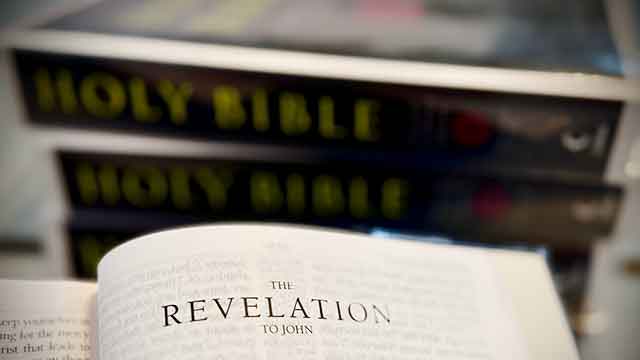
A talk on Revelation 2:1–7.


A talk on Revelation 2:1–7.
“To the angel of the church in Ephesus write: ‘The words of him who holds the seven stars in his right hand, who walks among the seven golden lampstands.
2 “‘I know your works, your toil and your patient endurance, and how you cannot bear with those who are evil, but have tested those who call themselves apostles and are not, and found them to be false. 3 I know you are enduring patiently and bearing up for my name’s sake, and you have not grown weary. 4 But I have this against you, that you have abandoned the love you had at first. 5 Remember therefore from where you have fallen; repent, and do the works you did at first. If not, I will come to you and remove your lampstand from its place, unless you repent. 6 Yet this you have: you hate the works of the Nicolaitans, which I also hate. 7 He who has an ear, let him hear what the Spirit says to the churches. To the one who conquers I will grant to eat of the tree of life, which is in the paradise of God.’
This transcript has been automatically generated
Thank you, our Father, that as we read this, we know the one to whom it points. Pray you'd help us now to know what it means to know and to live for the one who is King and Lord over all. Amen. Well, think back to your younger days. For some here, that'll take some effort.
For others, less so. But think back, maybe as a youth or even as a child. Back then, what were your passions? What did you get into? What was maybe an interest or a hobby or maybe an activity that consumed your time and energy?
I mean, you may well now have left it long behind, or maybe like Howell, building those Lego houses on the living room floor all those years ago has led to a lifetime in the construction industry. Even in retirement, he just can't let it go. Or maybe back then there was a person who consumed your time, your energy, your efforts. It may well have been a fleeting obsession that was never going to last. Or maybe that initial attachment remains as strong as ever.
Or maybe that person, well, they are still around, but the relationship is not quite what it once was. And that is the situation we find in today's passage from the book of Revelation. So we read on, beginning of chapter 2. To the angel of the church in Ephesus write: The words of him who holds the 7 stars in his right hand, who walks among the 7 golden lampstands: I know your works, your toil and your patient endurance, and how you cannot bear with those who are evil, but have tested those who call themselves apostles and are not, and found them to be false. I know you are enduring patiently and bearing up for my name's sake, and you have not grown weary.
But I have this against you, that you have abandoned the love you had at first. Remember therefore from where you have fallen; repent, and do the works you did at first. If not, I will come to you and remove your lampstand from its place, unless you repent. Yet this you have: you hate the works of the Nicolaitans, which I also hate. He who has an ear, let him hear what the Spirit says to the churches.
To the one who conquers, I will grant to eat of the tree of life, which is in the paradise of God. So, Revelation, we've been reading it the last few weeks. It was written a few decades later, towards the end of the first century AD. And last week we saw how John had that dazzling vision. It was a vision of one he had known while on earth, Jesus.
But now he saw him for where he is now, as he truly is, the glorious Son of Man, this divine ruler, the judge of all the earth, the one who yet cares passionately for his people. And John was told, we heard, that he should write down what he had seen to these 7 churches located in what is today modern-day Turkey. And that's Revelation chapters 2 and 3. It has these 7 letters, one to each of those churches. But this isn't just John writing down his impressions.
No, it's much more than that. John is even given the words to say, because in these letters, Christ the Lord is speaking. And to start off, Christ the Lord has a message to the church in Ephesus. Look how verse 1 begins, to the angel of the church in Ephesus write. So remember, John is on his island of Patmos.
He's there in exile. This is an island in the Aegean Sea, some 40 miles or so off the mainland of western Turkey. And these 7 churches to which John writes, well, they are in a circle, and Ephesus is the one closest on the mainland to Patmos. And the city of Ephesus at the time was dominated by the great, well, wonder of the world, the ancient world, this temple to Artemis or Diana. The city was filled with idolatry.
But the gospel had reached the city. Do you remember we saw that not too long ago in our series in Acts? In Acts 20, you might remember, the Apostle Paul gave a stirring charge to the Ephesian elders. And then in time, Paul would come to write a well-known letter to those Ephesians. Well, now, right, John is writing some years later to this church.
There is more for them. But before we go on and dig into the details, we need to realise it's not only for them, because Christ the Lord here is speaking to all the churches. Now, John remembers to write of the vision he has had, and sure enough, each of these letters pick up on that vision that John had of the Son of Man. We see that in verse 1, to the angel of the church in Ephesus write the words of him who holds the 7 stars in his right hand, who walks among the 7 golden lampstands. We thought about this imagery a little last week.
Both the stars and the lampstands are a way of describing these 7 churches. The churches are in Christ's hands experiencing his protection and care. And then Christ is among the 7 lampstands, the churches. He's in their midst with them, walking amongst them just as the Lord God walked with his people in the Garden of Eden. And notice how even at the start of one particular letter is where we get this.
So, it's a letter to Ephesus, But it's emphasised to them, if you like, that Christ is among all the churches. And that gets picked up in verse 7, he who has an ear to hear, let him hear what the Spirit says to the churches. That is, each message to an individual church is at the same time for all the churches. And not just for these first 7 initial churches. Remember, the 7 stands for fullness or completeness.
So, through these 7 messages to these 7 churches, Christ is speaking to all churches, including St. Bennet's. But let's just make sure we're thinking clearly about that. Now, we notice as we read through, each of these 7 churches in Revelation 2 and 3 are in different situations. They're different challenges. Some are doing better than others.
So, as we read this, it's not as if we somewhat simplistically think this week, well, St. Benedict is just like Ephesus and that next week will be just like Smyrna. That wouldn't really make any sense to do that. Although it may be that by the end of these 7 churches we'll think, well, we are just like that one in particular. Therefore, particularly we need to listen to that challenge. But there will also be something for us, as we've heard, in all the letters.
So that is, when something is commended, well, we should think, how do we pursue that? When a warning is given, we should be willing to heed it. Because in all of this, Christ the Lord is speaking to all the churches in these letters. Well, with the scene set, let's dive in. What do we find in this first letter to the church in Ephesus?
What does Christ say? Well, first, he does commend evidence of faithfulness. So, remember, Christ is among the churches. That means he knows what's going on. And it's obvious he doesn't just take a one-moment snapshot.
He's been there, if you like, over the years. So, he knows what to commend and he commends what's been seen over time. Verse 2 begins, I know your works, your toil, and your patient endurance. So, no one else may see it, but Christ does. He sees that there was much for this church in Ephesus to do.
And they laboured at it diligently. The going was tough, but he could see they endured patiently. We see more of this in verse 3: I know you are enduring patiently and bearing up for my name's sake, and you have not grown weary. So again, no one else may notice. The world certainly wouldn't recognise it, but Christ sees it.
This church in Ephesus, it knew that commitment to Christ would be costly over time. Requiring perseverance, and they've shown that. And with that, they're also resisting evil and falsehood. So, from the middle of verse 2, he says that they have tested those who call themselves apostles and are not, found to be false. They can't bear with those who are evil.
Well, ever since the Garden of Eden, isn't it, Satan has been out to deceive and to deceive God's people. He even tried it against Christ in the wilderness when Christ was on earth. Remember the Apostle Paul when he spoke to the Ephesian elders? He warned them that men would arise and twist things, aiming to draw people away. And now we know sure enough that is exactly what happened, even in Ephesus.
But the church there, well, they remembered, if you like, what Christ, what Paul had said to them. They stuck to the truth about Jesus. They rejected those imposters. And there's more down in verse 6. Yet this you have: you hate the works of the Nicolaitans, which I also hate.
Now, it's not recorded for us what the Nicolaitans were doing, but the point obviously is it is right to hate those things. I mean, we could even say, so long as we understand this rightly, hatred is commended. Because maybe there was all sorts of pressure for that church in Ephesus to just relax, calm down, don't be so uptight about things. Why are you so judgmental? Why didn't he just focus on the good?
And so on. But notice how Christ encourages them and commends them. He says that he hates those works too. There are things which happen in our world and even within the church that God, well, he hates them. They hurt others.
According to the Bible, they are to be resisted strongly, and he commends that. So, obviously, as we read this, it should be our prayer that these would mark us here at St. Benedict's and the wider Church. That we wouldn't be naive. There are those within even the visible Church trying to draw others away, undermining what God has said. That we do see sin and evil for the horror that it is.
It's good news that God can't tolerate it, and so we must flee from it. Instead, we stick to the truth as being revealed. And we should be under no illusions. Ongoing allegiance to Christ will require toil, bearing up, patient endurance without growing weary. That's what the church in Ephesus was doing.
And Christ commends such evidence of faithfulness. Next, we see Christ commands repentance and return. Verse 4, but, Christ says, I have this against you, that you have abandoned the love you had at first. Remember therefore from where you have fallen, repent and do the works you did at first. If not, I will come to you and remove your lampstand from its place unless you repent.
Now, it's worth noting, isn't it? There was plenty genuinely to commend in the church in Ephesus. And yet, Christ sees, Christ knows the heart had gone missing. The love for him was no longer there. And notice it's not just about feelings.
True love is seen in action. Christ could see that the works that were there at first, that evidenced this genuine love for him, were no longer present. You can tell over time if people are committed primarily to Christ. Maybe a delight in him. The way they speak of him, an open thankfulness, a longing to speak to others, even knowing that might cause all sorts of difficulties in relationships, in opposition to the world.
But there's that love for Christ that still even wants to do those things. Well, this is a warning to any church, so we need to hear it as well. Even a church which may well be doing lots of the right things and seem to be doing them, they are working hard, they are resisting error in certain ways, and yet it is possible, in the midst of all those good things, the love that was there at first has gone. And obviously, this is no small matter. Quite the opposite.
Christ quite simply calls for repentance. That is, the church in Ephesus needed to turn around. Now, a turnaround begins by turning to again look at Christ, because it must be that the heart, the eyes have turned away So, look again on Christ. See why you loved him at first. The excitement, the wonder of who he is, what he is like, what he has done.
And then as you begin to see that once again, the heart begins to be warmed. Well, then act in the light of it. Think what should follow and then choose to live those ways. Live as if Christ really is the most important thing. Which he is.
What would that look like in the personal lives that we have, in our concern for one another within the church, in our interactions with the world around us? Surely they would be transformed. Well, this Ephesian church needed to do again the works they did at first. And this does come with a warning, doesn't it? If this repentance is lacking, then Christ says he will remove your lampstand from its place.
That is, Christ will no longer be with this church in Ephesus. It will be removed. Which again really makes sense that if the church has lost its love for Christ, his putting him first, well, it's actually no longer a church at all, and Christ will no longer be with them. All of this echoes, of course, what Jesus himself said to his disciples while he was on earth. Love of many will grow cold, but the one who endures to the end, will be saved.
Of course, Christ by these words is in love trying to shake these Ephesians up, to wake them up, to bring them to their senses, to listen, to take action. And he does it out of love because he knows it'll be worth it. Because as well as commanding repentance and return, Christ promises life in paradise. Verse 7, he who has an ear to hear, let him hear what the Spirit says to the churches. To the one who conquers, I will grant to eat of the tree of life which is in the paradise of God.
So again, we're thinking of a garden, the tree of life. We'll remember that as Adam and Eve turned away, they were expelled, they were barred from coming back to the tree of life. The whole story of the Bible is how God restored access to that tree, to that life that he gives. And because Christ himself, through his death on the cross, is the one who's provided the way, he can give this astounding promise in verse 7. That he personally will grant to us to eat of the tree of life, which is in the paradise of God.
And so it is that to the one who conquers, to the individual and to the church that keep this focus on Christ and lives like it, they will enjoy this glorious future. Yes, for now there'll be challenges of this false teaching, of living in the midst of people living shamefully, of the need to endure patiently over many years working hard, well, that will come to an end. And then we will be in full with, well, our heart's desire, our first love with Christ, enjoying this life he has won for us. I'll lead us in a prayer. We do praise you, our Father, for these words from Christ to us, for this encouragement to persevere in good works, to resist falsehood and evil, to endure patiently.
And we pray that we would do that, because we are indeed focused on Christ, that our actions and words in all of life would reflect this genuine primary commitment to him. Thank you for the wonder of Christ, for who he is and this glorious future that he has gladly won for us that we are awaiting. Amen.