Ros Furlong gives a talk on how we can walk alongside brothers and sisters facing mental health struggles.
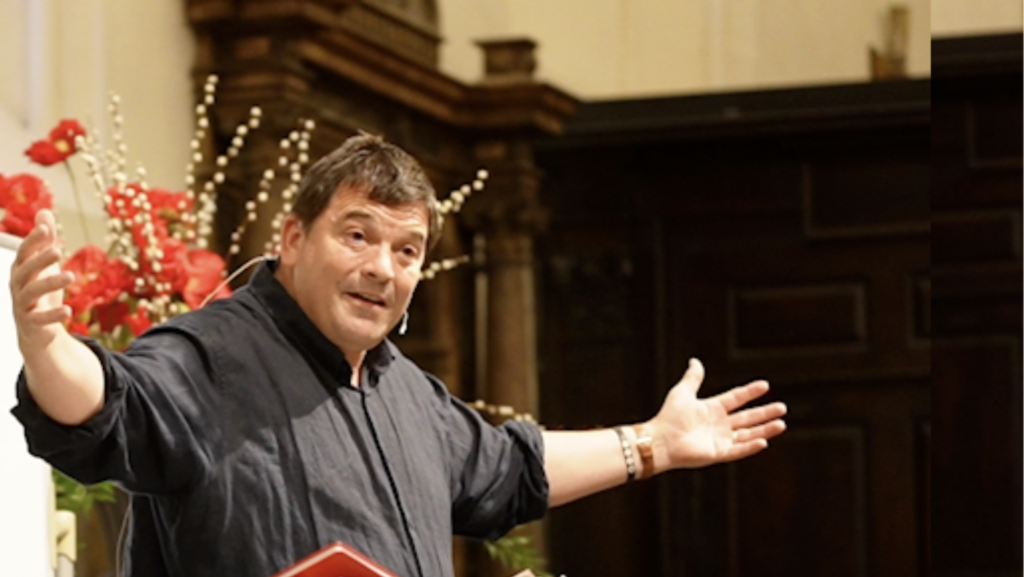

Ros Furlong gives a talk on how we can walk alongside brothers and sisters facing mental health struggles.
This transcript has been automatically generated
So we are talking this afternoon about walking alongside brothers or sisters facing mental health struggles, which will include all of us at times, according to the national statistics. So it's- and it's really important because I see it as a two-way process. It's something we can all grow from, whether we have the mental health struggles or not. So I'd just like to start by going back to last month's Equip session where we were looking at loving one another. Because that's really where it all starts.
Um, we looked at the 1 John 4 passage. You've all got references printed out so that we finish at a sensible time rather than having to wait for everyone to look them up. So we're now on reference 1 for the cook talk. It's 1 John 4:7-9. Page 1229.
Thank you.
Okay. Beloved, let us love one another, for love is from God, and whoever loves has been born of God and knows God. Anyone who does not love does not know God, because God is love. Then 11: Beloved, if God so loved us, we also ought to love one another. No one has ever seen God.
If we love one another, God abides in us and his love is perfected in us. So as we're looking at the central tenet, really- Jesus spent a lot of time talking about love, and so do many of the epistles- we need to just remember that God is the person who empowers our love. We're not doing it in our own strength, we're not doing it in our own capacity. We have somewhat limited capacity, but mercifully he doesn't. Um, so our love starts vertically.
He loves the people we want to love, and so he can give us his love for them, which is a great blessing, and without which I wouldn't bother to stand here, really. Um, so God delights to give us his love. It's what he wants to do. It's the glue that keeps us together. We're told we're the body of Christ.
We need to link with each other. We're the new temple, a building which he's designed, and we are only a building if we're joined to each other. It's not a dry stone wall which a good gale would blow over, possibly not well made. But we do need to have that cement, and that cement is God's love that he gives us for one another and for ourselves, obviously, initially. So without it, without God's love, we lack any appropriate motivation for caring.
Um, we're not doing it for our own benefit. If we are, then it becomes condescending. Nobody wants to be condescended to. We are caring because we want to, because we care about the person or people that we're talking, thinking about. So without it also, it's worth bearing in mind, it's not just important in the church family, but if we're not caring for our others outside the church family, our motives for evangelism are also a little bit skewed, and we need to think that through and ask for God's love.
We need to draw daily on God's love, both for one another and for those others around us. And we need to be caring in the way- it's a way love is expressed, is in care. We want to be caring because it's part of what we feel, having drawn from the Lord. And that's that's a real blessing. So that's really a recap on Phil's talk last week, which he said a lot more, but listen to it.
Oh, it's not online. Anyway, it was good. There is, however, more motivation on Be Here. To walk alongside means sharing in the suffering. I mean, there's an old saying, a trouble shared is a trouble halved.
Well, I think we can rather regard that as an overstatement. Most people don't find it halved, but it certainly helps. In the process, we do take some of the suffering or trouble on ourselves. It doesn't leave us, you know, as we started, but we are taking some on. And that is important, that we're ready to do that and willing to do that, and we see that as what we should be doing as a Christian.
There's a very good reason why we need to do it as a Christian. It's the one way in which we grow to maturity, and we'll be looking at some verses on that. Um, it should be a struggle for us, and it doesn't have to be a struggle that we're embarking on our own. We have God's strength, we have God's love, and we have his um will for us. I mean, he won't give us things to do that he doesn't want us to do.
We can ask him And he will give us what he wants us to do and give us the strength and the heart for it.
So why is it a struggle? Why do we as Christians have to suffer? Why do Christians get mental health issues? Wrong. The first reason is that we live in a broken or fallen world.
Let's just look at Romans 8. It's on here, number 2, save time, and the reference sheet. For we know that the whole creation has been groaning together in the pains of childbirth until now. And not only the creation, but we ourselves, who have the firstfruits of the Spirit, groan inwardly as we wait eagerly for adoption as sons, the redemption of our bodies. For we know that the whole creation has been groaning together, and that's something which is really important that we recognise and accept.
I think you've got it written down twice on there, I'm sorry. Um, and that is something which we, having regard for, realise that it's gonna get to us as Christians. We don't like seeing suffering, we don't like seeing things, you know, the evil one having various triumphs. We- this is something which is naturally distressing for us. And so this world is not necessarily a happy place, even if we haven't got mental health issues.
Um, there's more on that that we could talk about, but time doesn't allow, and I've talked at more length in a previous talk from a couple of years ago. It's on the website if anybody wants. Um, the second point is that God does use suffering to mature us, including mental health struggles, ours and sharing others. Let's just read Romans 5 together. That's the third reference on the sheet.
Therefore, since we have been justified by faith, we have peace with God through our Lord Jesus Christ. Through him we have also obtained access by faith into this grace in which we stand, and we rejoice in the hope of the glory of God. All very positive. But more than that, we rejoice in our sufferings, knowing that suffering produces endurance, and endurance produces character, and character produces hope. And hope does not put us to shame, because God's love has been poured into our hearts through the Holy Spirit, who has been given to us.
It's quite a complicated thought process, that, and I'm not doing a sermon, so I'm not gonna expound it, but it's worth giving thought to and trying to understand. Um, so our sufferings help us to grow up, both in godliness. But if you think of it, even as human beings- I mean, do you know anybody who's had a very easy life? They're all quite superficial, and they don't get quite a lot of what life's about. You know, we we in a way it's the metal that tests us as human beings, even more so as a Christian, because we have the chance to suffer with God's help and that in will make it into something worthwhile.
He will actually help us through. But it's harder for other people, but you know, they're better off having a bit than nothing and left superficial. It's an opportunity to develop a godly character and hope that gives us a deep joy which is long-term. It may not be very joyful, as it were, at the time, but we know the most popular psalm probably is 23. I mean, even in people who aren't Christians, they often want it at their funerals.
And it's as we encounter God in the shadow of death, whatever form that comes, We're deeply comforted. And God's word also challenges um further through James. Look at reference number 4: "Count it all joy, my brothers, when you meet trials of various kinds." I I had to stop and think about that a few years ago and tell God I didn't think I was very good at that, but he's he's helped quite a bit since. Um, "For you know that the testing of your faith produces steadfastness." and let steadfastness have its full effect, that you may be perfect and complete, lacking in nothing. Which means that we will be resilient.
That's really what it means, that our dependency will be on God, and we'll know he's sovereign, and that'll make us resilient. So his perfection, as it were, we've been able to take on board a bit. And that's when, if we see things are difficult, we don't shy away from them. We just trust that God is sovereign and he works his purposes out. And ultimately we know where we're going and we know it's gonna be different.
So why else should life be a struggle? Um, you see from the number 3 of this, we're following Jesus, and Jesus lived a life of suffering and grief. We read in Isaiah 53:3, which is number 5, he was despised and rejected by men, a man of sorrows and acquainted with grief, and as one from whom men hide their faces. He was despised, and we esteemed him not. So that's who we're following.
That's the path that, in a way, he spares most of us for taking. You don't have as difficult a path as he trod. But as we do- are willing to follow in struggling with things, we are following him, and he's been there first, and he will see us through. He endured the worst kind of suffering, and he was misunderstood by most people around him and deserted by most people right at the end. So there's nothing that we have gone through or are going to be going through that he has not experienced.
There's that lovely bit in Hebrews that I've not got down here, but you know, he experience all our weakness, and he understands. He's with us in it. He understands. So suffering is usual and normal, and it's a sort of necessary evil. It's part of this fallen world that that we need that to grow, as well as um things being nice and easy.
I just want to point out that God's reasons are often obscure. It's not the way he originally designed the world to be. It's not how the new world will be one day, but it is how it is here on Earth. It's something which we need to accept, and we need to accept that God does have a purpose, although it's often not obvious. So we don't have to worry about not being able to see the reason.
And sometimes we can beat ourselves up not being able to see the reason, or feel we have to explain to our friends why something's happening. We don't. We can just- sometimes he will show us, and it's lovely when he does, but other times he won't, and um we need to just hang on. I think it's classic, isn't it, that we have the Book of Job in the Bible- 42 chapters all taken up with somebody who was suffering and didn't know why. This is quite extraordinary.
So it's clear that we're meant to get that lesson. Or it wouldn't be in the Bible, would it? And that's an encouragement for us. And you know, what he learned at the end was that God was God and almighty and much more powerful than he could imagine. That can feel like something remote, but I can assure you that if we are suffering, that's something that is actually very reassuring, that God is more powerful than anything else and that his promises can be relied on.
And it doesn't matter that we can't see what's going on.
So the other thing to remember is that Paul suffered his thorn in the flesh, which kept him humble in weakness. And I've got down there 2 Corinthians chapter 12:7-9, which I'll read. I'm reading the verses because I do think things stick in our mind, you know, and you're not just relying on what I'm coming up with, but there are stuff that we can go back to and study more and think So 2 Corinthians 12, Paul says, so to keep me from becoming conceited because of the surpassing greatness of the revelations- we know he had visions of heaven and things, don't we? I mean, he had wonderful blessings, and he saw Jesus, you know, on the road to Damascus. A thorn was given me in the flesh, a messenger of Satan to harass me, to keep me from becoming conceited.
3 times I pleaded with the Lord about this, that it should leave me. But he said to me, my grace is sufficient for you, for my power is made perfect in weakness. Therefore I will boast all the more gladly of my weaknesses, so the power of Christ may rest upon me.
I think that's a wonderful challenge, because the biggest problem we often have with mental health stuff is feeling weak, and the biggest concern we have is it feels sort of shameful, but we'll get on to that. Um, and you know, it wasn't- as far as Paul was concerned, this was an important part of his living experience, and it had a a purpose that we might not have seen quite as clearly as he did. The next verse down there, reference 7- even Paul, with all that experience and confidence he had, I just think it is interesting just to note, I was with you in weakness and in fear and much trembling. You know, it's okay being anxious, being fearful, whatever. We're in very good company.
It doesn't mean it's nice, but it means that it's not wrong. It's something which is a normal human experience in various degrees.
So we can too be helped by the Holy Spirit in our weakness. And our weakness can be to God's glory.
Okay, I think I'm getting onto page 2 of your handout. What holds us back from accepting and engaging with those suffering around us? Firstly, I just need to mention it is countercultural, particularly these days. The backdrop we have is sufferings to be avoided at all costs, sometimes not something to be learned from. It's something which results in people being self-pitying and self-excusing and stuff which really is um not what we want to be doing as a Christian when facing it.
Suffering is resented too in our culture. It's an unexpected imposition, it's undeserved, um at least that's how it's seen, whereas we know otherwise. And mental health struggles still have a stigma seen as a weakness, at least regarded as a flaw by some. And we know from what we read in the Bible that weaknesses aren't bad things. We read- I mean, even starting off, you know, the Sermon on the Mount, the way God's kingdom is counterculture, it's completely counterculture, it's upside down.
You know, the weak are strong. We know that from the Lord's word, that there's stuff that we see as uh potentially our fault or our failing, which the Lord actually sees as something positive for us, that he he loves us because we're experiencing life in the real, we're actually engaging with it emotionally, and he will be with us through those struggles.
Um the other countercultural thing is it we we do regard it as a private matter, being those of us who are British around here. Others know better. But um it it our natural tendency is not to talk about personal stuff, which is fine up to a point, but it depends on our motivation for not talking about it. Sometimes it's really good to share it with somebody who's going through something similar and they can feel not on their own. But we need to be wise in that.
Okay, what about our church subculture? Do we treat suffering as a lack of faith? Somehow one oughtn't to be suffering because that shows you're not trusting God and you're not happy in the Lord or whatever. I think God should be blessing us all the time. We fortunately don't have the prosperity gospel preached here, but even so, there's a tendency to feel that somehow God ought to spare us or sort something out, or if we're following him and doing our best to be- help, you know, serve him, then we ought to be spared certain things.
No, that's not really, I don't think, how the Bible teaches us. Um, and the other thing is to just minimise what people go through, think Christians in the West don't really suffer. Um, and so we might be finding something terribly hard, but it's just because we're a bit, you know, wanting it all easy or whatever. And it's not necessarily like that at all. So where does suffering with mental health struggles fit in?
Um, how is our faith tested and grown? We don't have natural disasters in UK much, although there's been a bit of flooding. We're getting more than we used to, but we don't go home fearing that- most of us- that our home's going to be flooded or the roof's taken off. It's a rare, rare occasion and only for bits of the UK. We're not likely to die in famines.
We have had a plague But actually, if you look at the statistics, not that many more people died than would have died by natural causes, dare I say. But just look on the website and you can see. I mean, it was tragic and we lost dear friends, but through COVID, but it, you know, compared with the sort of loss of life in some places in the world, um, we didn't suffer this badly. Persecution for our faith. Persecution is the thing that's referred to a lot in the Bible and And obviously the young churches experienced it strikingly with the attitudes around them.
We get it within some context now, but it's limited. It's probably growing, but it's not at the same level that it was in the New Testament. And you know, it won't necessarily knock us as hard as it would have done them, or place us at physical risk or any other sort of risk, lose our jobs. Sometimes we don't get jobs, but as a result of it, but usually less so now than it may be in the future. Our physical health challenges are commonly known, but we do have good practical health and treatment available.
Well, we have some available free. Most of us make the most of it and are thankful for it. Um, and that leaves for the average Christian they're more likely to have psychological struggles and tests than all these other things. That's what we're facing day by day, week by week, month by month, year by year. It's the things which get to us emotionally that are the things which are going to stretch us and test us and and grow our faith.
So God does use mental health struggles often to mature us and glorify him. And we must not allow ourselves to be swept into the current stigmatised view or inherent fear of them or sense of shame. We have to fight those things. They're not biblical and they're not um true. Okay, so just to clarify what we mean by mental health struggles, uh it's a spectrum.
Um, understanding ourselves and others, we can up to a point- there's not a big divide between normal range and clinical disorder. It's a spectrum, and we can find ourselves, you know, getting into one or spiralling out of one. And we need to recognise that there- we all get down times, we all get anxious times, and that will help us to extrapolate to what it must be like for person we're meeting with who may be in a much more low time or a much more widely anxiety-affected situation. And so that'll help a bit with our empathy and understanding. Just want to- you to spend a minute or two, you could do it in two, but rather just doing it on your own, just thinking for a minute back to what has stressed you and how it made you feel at the time and and since, how you've regarded it since.
Just a couple of minutes, just think about something that has been stressful, distressing in some way or other, and just remember what it was like. And that'll help you to imagine it more extreme, but it'll also help you to see how God helped it. All right, a couple of minutes. Okay, let's move on, if we may. So I'm not gonna talk a lot about when normal becomes clinical illness or disorder.
There's a whole range of things from post-traumatic stress disorder, addictions, psychosis, eating disorders, later in life dementia. The commonest thing is mixed depression and anxiety. 80 in 100 people are estimated as suffering from that, and that's only in the population in England that are not um in poverty belt or whatever. It's people leading normal lives. There's um helpful information, you know, I I did more on that in a previous talk, and we haven't got time to address that today.
But just um to sum up the crucial things in terms of encouraging somebody to seek professional help when they're unwell, we usually define it by having been significantly affected for 2 weeks, mostly continuously, of a degree relative to the stress that's abnormal. You know, so okay, we all have stresses and there's a limit to how badly they should be affecting us, but if it's got distorted, that's significant. And if it's disabling and interfering with normal life, so not being able to get on with things you'd normally get on with for at least 2 weeks continuously, is a sort of um time when, you know, you should be encouraging to go and see a GP and see what help's available and regard something as um needing some professional help. Okay, there's another D. I've got duration, degree, and disabling, but the other D is danger. Um the risk of acute and serious harm is something which we need to be aware of.
Um over a lifetime Believe it or not, 1 in 5 people have suicidal thoughts at some stage. There's some important to know that talking about suicidal thoughts does not encourage people to do it. It has the opposite effect. It's better to ask people and to hear about it and to talk about it. And there's things you can do.
There's a really good safety plan that's online. There's copies on the table over there. And it's downloadable from the Samaritans website, and it's really good. So if people are worried that when they do it next time they might actually be tempted to uh to kill themselves, then you can encourage them to do that safety plan and obviously get some more help if possible. So that is important.
Um obviously we're talking today And this talk particularly is a tribute, is a tribute to our dear Brother Richard, who died, as we know, um, not long ago, only a matter of months. And it was a great cause of sorrow in our church, and it's one thing that's come out of it is focus our minds on what more we can be doing for one another. He suffered from depression many years, and it was just tragic. That he died at his own hand. And so I'm mentioning this and attributing it to him, really, having had encouragement and help from Heather, his wife, who's helped me prepare the talk as well, and who's very keen on this book, which we'll get on to, which is, is an excellent book.
We've got tons on the stall, and there's ones available. It's not expensive. It's called Mental Health in Your Church: A Handbook for Biblical Care. It has a lot of useful features, one being we were talking about um all the different types of mental health problems. It's got brilliant little vignettes which give you a feel for what various forms of mental health struggle can be like, and I think that's terribly useful.
It just helps one understand a bit more. That's one of the things I'll be coming back to it. Later.
So on page 3 now, developing as a church that loves one another effectively in sickness and health, and hence thus speak and teach that God uses suffering for our good as well as each other's good. You know, we can all- we can all gain in a way. How do we learn from each other? Um, we learn that emotions fluctuate Many older Christians have stories of desert experiences where they didn't feel God's presence for a while, um, and they just stayed faithful and they got back to it again. You know, depression can take away your feelings, and that can be really hard.
Um, surviving profound griefs too, and through the way in which God enables us, his presence, we feel more when we're in a profoundly grieving situation. And there are plenty of people who will testify to that. And certainly, I think the worst thing happened to me had a positive effect, and it's given me a security that I- I had obviously a faith before, a strong one, but the security of knowing that when things are really bad, God sort of picks you up and just carries on. I know it's a bit cheesy, but it happens, and you have a sense of him being closer and seeing you through. And I can see nods for people with grey hair like mine.
So I just think that's something we can just rest assured of and um and bear in mind and learn from one another.
With support, we can limit the extent to which people can spiral down through life stress. Um there are plenty of them. I'm aware that time is limited, and I won't go through in any detail, but we can- if we're prone through inherent vulnerability to mental health illness, or if we had past trauma that has affected us, you know, traumatic abuse and things like that can really affect us in a subconscious way physically as well as emotionally, and that can make us more vulnerable. We need to get help when we can. Our genes, our physiology, you know, we're all different.
And sometimes people get ill spontaneously with no adverse change that just can lead to mental health relapse. So it's worth knowing that.
The way in which we deal with things- no one's obliged to work out their grief publicly. It's important to say that we don't have to have our hearts on our sleeves. We don't have to be baring ourselves to everybody, but we should just pray for one or two people who the Lord might want us to share with and pray with and and go through things with. We do need to look out for one another, particularly if one another is not there for a few weeks. What's happening?
And and just just keep an eye open. We need to be willing to share empathetically rather than hold back because we're ashamed, or, you know, we don't like to appear weak, or whatever it is. Um, you know, Paul shared a lot in the epistles about his own sense of weakness and, and things, and, and I think we should be willing to follow his example. Sometimes we should be open both to helping one another and being helped ourselves. Some of us find it much easier to be helping them helped, but it's important to be doing both really.
Um, and one gets better at doing whichever one you're not very good at over time. So how can we support one another and ourselves? Come to that. Uh, one thing is making intentional time commitments, actually working out what one needs to spend some time doing regularly. And if it's do with someone else we're concerned about, praying about what time we can invest for- spend time with them and helping in whatever way.
We're told to bear one another's burdens, reference 8 in Galatians, excuse me, and so fulfil the law of Christ. So we we should be making time to do these things. Page four we ought to also be making time to just keep fit mentally and physically and keep healthy. Um, there are a number of those things down there, the stuff you'll get from secular websites that actually help people maintain their mental health. And we know there's quite a lot of biblical stuff that encourages to do all that as well, which is wonderful.
So The top of the list usually is stay connected with people. Even when you're not a Christian, that's recognised as making a difference to how you- healthy you are. As a Christian, we know we oughtn't to neglect meeting together. We know we should be, you know, involved with each other as family and not just casually, as it were. We need to take time to connect and meet together inside and outside church.
Another thing is learning uh new things or old ideas or experiences. We can learn from the Bible, of course, and and there are great books around and notes and things. We can also explore the beauty in God's creation. It's quite uplifting. There's some of the things that are available to look at these days, or just going for a walk.
We've learned a bit about going for a walk, haven't we, in COVID, that actually being out in the fresh air, that's therapeutic, surprise, surprise. Um, so we can walk in practical ways. We can have exercise, try and build it in. If we're short of time but we want to be able to do something with somebody else, we can arrange to meet them and do it if that's practical. It's a bit difficult when we're all spread around, but it shouldn't be impossible.
I put with or without a dog. I think those with dogs have great reasons for embarking on walks, but the rest of us need a bit of encouragement.
Eating healthily, seeking help if you're struggling financially. There's quite a lot of help available around, and there have been plenty of people having that need. If we're going to visit somebody, um, who's not very well, somebody helps go in twos. Um, you know, visiting in hospital or going to see somebody in their home is less stressful for them if two of us roll up. We can have a bit of conversation rather than them feeling they've gotta drag themselves up and help out, respond to all our questions, you know.
So just, if if in doubt, find someone else to go along and do something as a threesome, or visit somebody at home in twos. Um, this age of um connectivity, we can't just rely on sending somebody a text if they're depressed, to have an impact. We need to do the text but follow it up. Um, yeah, because media aren't good ways of communicating, and people can ignore them and sort of want to get back but not want to commit themselves or get into, you know, complicated situation, not know quite what to say. And so we need to remember, just picking up a phone sometimes is better.
And you can start about Is this a convenient time for chat, or would you rather just not? You know, we don't have to impose ourselves on people, but sometimes it's important to follow the phone call. Um, and the bottom line is just to be available. Get realistic about what time we've got and what time we can make without grinding ourselves into the ground. And be clear about our availability, our limits, to people who we want to be therefore don't overpromise.
Remember, we're not the saviour. They have got one, it's not us, and he provides in other ways through other people. So I think that's important to- giving. Giving is recognised by the NHS as something which does us good. Isn't that wonderful?
Um, and it draws attention to the fact one just can give something as little as a smile or a thank you, but just one thing a day to get going. If you're feeling really withdrawn and can't face life. But just some sort of form of giving is really good. It's nice for us to be reminded of that because we should be well aware of it, shouldn't we? More blessed to give than to receive.
Um, being observant about our patterns of thought, patterns of thought that encourage, um, other ones that discourage, and go around in negative spirals, how we deal with them. There are various ways. The um NHS first line of call is cognitive behaviour therapy, most of which makes sense biblically. There's the odd thing like, you know, people sometimes don't rate guilt the way they should, or understand it, uh or understand grace. But a lot of the rest of it's fairly straightforward.
It is actually doing what we're told to do. We're told to think on good things. Look at reference 9, Philippians 4:6-8.
Finally, brothers, whatever is true, whatever is honourable, whatever is just, whatever is pure, whatever is lovely, whatever is commendable, if there's any excellence, if there's anything worthy of praise, think about these things. What you have learned and received and heard and seen in me, practice these things. And the God of peace will be with you.
There's a lot to getting onto positive, encouraging patterns of thought.
And then finally, next, I would say spirituality. We need to be praying for one another. We need to be prayed for. It can be just a short prayer if we meet, but it's obviously important. And that really acknowledges what the core of our visits about, or our relationship.
It's about the Lord and his blessing and his help.
We can read sometimes just a verse or two of scripture if people are exhausted, and we can look at ways of helping them get to church, which is often hard if you're feeling a bit lower.
Okay. In practice, there are lots of things we can do. I would encourage you to read chapter 10 of this book, which gives us a whole lot of ways in which we can be of use to people around. Um, and the the lot of the vignettes contain examples of how we can support one another and what all that means in practice.
Um, and I think that's important that we can do that and make a point of doing so.
If there are shadows over our lives from stuff in the past, from porn exposure, from other sorts of damage, it's important that we seek help. Individual therapy is often the only safe place to work through things. And there are people who can offer that, and it does make a lot of difference. It takes what sort of hangs about up there, here, and then disperses it. Sort of, that's the basic underlying principle, and it's important that we recognise that and avail ourselves.
I think we're gonna see more of it in our over-sexualized and unhealthy society. There's more sexual abuse around, particularly for teenage girls. And younger. And um we need to be aware of that and be sensitive to it and be trying to help people find any help they need to get over what's happened to them, which often stays buried. Sometimes you can't even remember it yourself.
A good friend of mine had no idea she'd been abused until she started having some therapy, and then it all came back and um could explain why she went overseas for the majority of her life to get away But she didn't know that's why she was going. And I think it's it's important to realise that these things can have quite a profound effect, but need to be handled very carefully because you can't just suddenly take it all on board. It's important if we're concerned about someone to know what to do. We can talk to or encourage them to talk to a group leader or a senior person at church. We've got a a good safeguarding officer who's available on the phone, who's very sensible.
And what you need to know is that you can talk fully confidentially. You don't have to give people's names. You can get advice on what would be appropriate in this situation, which you can then go back and think about, and then maybe talk to the person, and then do something about it if necessary. But you don't have to blurt out who they are and all the details necessarily. Um, you know, when you've just heard it, it's important to make notes and then inform the safeguarding officer.
But you just take it from there where they say, well, we've gotta know this person's on, not- then you can take it from there. Um, yes, and same applies to GPs. Just- I haven't got that down, but just bear in mind, GPs can't tell you anything confidential about the person, but they can be on the receiving end if you're really worried because A, B, C, D, you can actually let them know and they take it on board for next time they see them. And that's worth knowing. And make it clear that you don't expect any comeback from them, but it it can be really helpful.
Okay, um, I was going to have an exercise in terms of just thinking of someone in our church family you might be able to draw alongside for help or to provide help. I'm not gonna do that because of the time, but it's something you can do when you get home, and maybe it's better done when we get home and we can pray about it and think about it. Finally, how we can use this book, Mental Health in Your Church. Its usefulness is providing lots of well-worked examples of how people struggle with mental health disorders. It helps us to understand and be able to relate better and help one another practically.
And I'm just gonna read the bit right at the end. It has an afterword, and I think it does a very good um summary really of what it's about. It's useful because it provides a lot- sorry, page 187 I'm quoting from. The calling to care is for the whole congregation of God's people and not just pastoral professionals or specialists. The writer's aim to create a resource that encourages ordinary church members to see how they can play a part in supporting and helping those struggling with their mental health.
The aim is also to move toward those who struggle when previously you might have moved away, to persevere— page 188— when previously you might have run out of things to say or do, to replace us and them attitude with all being united in our need of our Saviour. Whatever form our neediness takes, Christ reaches out to us with the comfort only he can bring, enabling us to build a church community who care really well for those at a point where mental health put them in need of comfort. And we have that lovely verse they finish with, 2 Corinthians 1:3-4, which is also on your handout. Reference 10: Blessed be the God and Father of our Lord Jesus Christ, the Father of mercies and God of all comfort, who comforts us in all our affliction, so that we may be able to comfort those who are in any affliction with the comfort with which we ourselves are comforted by God. It's a lot about comfort, isn't it?
All around. And it's, it's It's um it's a wonderful passage. The delightful thing about the book is it gives us an angle. It was an angle we can help one another. It helps us to build one another up.
It helps us indeed to share in God's comfort. And just on your final page, I've just got a few things in conclusion, which I'll keep to the minimum. That going to maturity is usually a painful process, deeply at times, and it's opposed by the evil one. He doesn't want us to grow to maturity. He wants us to just try and shrink away from things.
It mostly occurs through the ordinary knocks of life, ordinary things like, you know, being married, bringing up children, not being married, not being able to bring up children, getting old and things. You know, there's a whole ordinary stuff which can hit us deeply. It can just make life really hard in certain circumstances, spirals down. It's helpful to acknowledge and accept this. And there's a chap called Nuak who I read something from- he sent me- where he says, tears are like seeds.
One day they will grow and flower into something of worth. Or to be more accurate, they can be. This thought is not a burden to place on those in the midst of abject or awfulness. The constant need to know what God is doing in the middle of it, it becomes a weapon to afflict those who are in pain. But as we grieve and mourn and live our lives, God is offering us the opportunity to learn wisdom and to mature as individuals.
And as we walk alongside, grieving with our brothers and sisters in Christ, we will find an underlying joy and contentment We're helping Jesus build his church on earth, we're helping him knit his body together, we're drawing up life-giving sap for the Holy Spirit as part of God's vine, and we're serving Jesus on our way to heaven. And I can testify that it's it's a good life, you know. You don't get worn out because God replenishes all the time. He can just keep us going. So I'll just read Ephesians 4, just to finish with 11 on the handout.
Rather, speaking the truth in love, we're to grow up in every way unto him who is the head, into Christ. From him the whole body, joined and held together by every joint with which it is equipped, when each part is working properly, makes the body grow so that it builds itself up. Up in love. That is our prayer as a church, as a church family. Thank you.
Thank you so much. Just wait here. Just, um, hold on to that for a moment. Thank you, Ros. This has been really, really helpful for us.
We're up to our time, um, and I think rather than sort of open up a Q&A session with the whole floor, which we won't be able to do in 5 minutes, um it is to say that Ros is really happy to to chat more about these things, um and actually as questions come up that we have, please do raise them with me, raise them with Léonie, raise them with Ros, with one another, and let's help one another and keep thinking these through. So there'll be There'll be some need for the Sunday school guys to start setting up afterwards for the- before the 4 PM, but we're not going to sort of be forced out of the building. And so there's time, a little bit of time to be able to gather questions and start those conversations. And we hope that that's what will happen as a result of this session. But there are lots of resources as well at the back and that that we're also um uh compiled for us, and I would encourage you to go and have a look at those.
The book really, really is worth a read and and will be greatly helpful. Ross, is there anything else you want to say in terms of resources? Next, just, um, yeah, just on the back there, there are quite a lot of little booklets published by CCEF, which is a very good biblical counselling organisation. Um, I put their access and through 10 of those. Otherwise you pay a fortune in them being shipped from America.
Um, but there are ones of all sorts of things. We've got examples out there, but you look on the website for other things and they can be very helpful. Um, there's also some other books, a few copies of a lovely thing about Spurgeon, which I- you're welcome to have a copy. I've got extra in case. There's a lot of books on Forgiveness, which is a new little reissuing of a book that was out years ago.
Very easy to read, um, turn it around, and, um, and, and very helpful. Because, um, if I'd had more time, I would have said there are things which do undermine us in terms of patterns of thought. One is if we're stuck with a little bit of resentment somewhere back there, but somebody who's not gonna be sorry, never gonna be sorry, seems to have but all right. And how we get over that, how we actually can forgive and love that person through the Lord. It's a real challenge, but it's a real liberator from things which niggle away and eat away.
Um, and so that's a helpful, very small, easy-to-read book which gives us the biblical reasons and helps us to understand why and how to forgive. Um, and the other thing on that subject which I won't start going on about now, but is, is grumbling. And grumbling is something which I haven't got a booklet on, but there ought to be one because it's so contrary. You know, either God sent us something to suffer and get on with, or he doesn't want us to be doing something which is causing it. So we either have to stop what we're grumbling about and stop doing it if it's not right to be doing, or we have to get on with it with a positive spirit, asking for the grace that we need.
So, and grumbling and generally worrying comes into the same category. They're just things which are sorted out by knowing God is sovereign and by wanting to please him, which may not be the easy route, but it's, it's, it's a good one. And he will provide for his church regardless of us, thankfully. So it's a good thing to know.