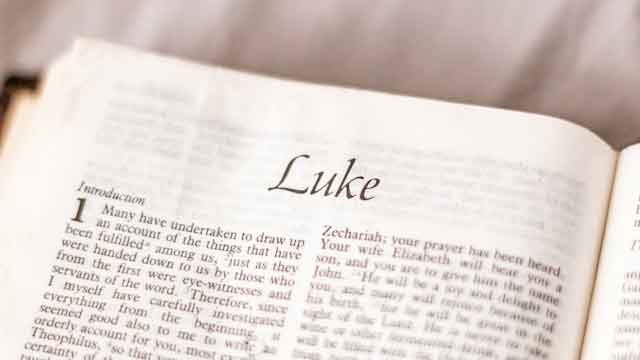
A talk from the Christmas is coming event.

elementor domain was triggered too early. This is usually an indicator for some code in the plugin or theme running too early. Translations should be loaded at the init action or later. Please see Debugging in WordPress for more information. (This message was added in version 6.7.0.) in /mnt/customers/customers-bh-108dcf/575c8d22-9e37-4570-b449-7bc62225f920/wp-content/wp-includes/functions.php on line 6260

A talk from the Christmas is coming event.
25 Now there was a man in Jerusalem, whose name was Simeon, and this man was righteous and devout, waiting for the consolation of Israel, and the Holy Spirit was upon him. 26 And it had been revealed to him by the Holy Spirit that he would not see death before he had seen the Lord’s Christ. 27 And he came in the Spirit into the temple, and when the parents brought in the child Jesus, to do for him according to the custom of the Law, 28 he took him up in his arms and blessed God and said,
29 “Lord, now you are letting your servant depart in peace,
according to your word;
30 for my eyes have seen your salvation
31 that you have prepared in the presence of all peoples,
32 a light for revelation to the Gentiles,
and for glory to your people Israel.”
33 And his father and his mother marveled at what was said about him. 34 And Simeon blessed them and said to Mary his mother, “Behold, this child is appointed for the fall and rising of many in Israel, and for a sign that is opposed 35 (and a sword will pierce through your own soul also), so that thoughts from many hearts may be revealed.”
This transcript has been automatically generated
Shall we turn our attention now to the side of Christmas that often gets lost in the busyness? Um, allow me to introduce to you Amy Wicks. Do you want to go this way? Yeah. Amy, welcome.
We’re really pleased you’re able to come and join us this evening. Um, Amy was at St Helen’s a number— for a number of years, but a couple of years ago she moved up to Southgate, um, to Bible College. Amy, as lovely as the North London suburbs are, yeah, um, what made you give up the kind of the buzz of central London and move to the countryside? Yeah, Zone 6 is a whole different world, let me tell you, but you do not need your passport to get there, so you can come and visit quite easily. And yeah, quite apart from being able to breathe in fresh air every day, the reason I moved, as Jo said, I used to work at St. Helens.
My job was to to help women get to know about Jesus better. And going to Bible college is a way of learning how to do that better. So, yeah, I packed up the flat, I gave my furniture away, and I’ve gone back to being a student. I think a bit like, it feels a bit like being the plot of a bad movie that there’s a lot of 25-year-olds around who play board games and things every Saturday, and there’s me being a student. But it’s, yeah, and I did it because, Um, really, I think there is nothing more important in life than knowing Jesus, and, um, and I wanted to learn how to help other people know that as best I could.
Amy, what exactly does that mean? Yeah, yeah, what does that mean? Um, it’s— I think it’s a really important thing to know, know who Jesus is and to know him as Saviour. We’re going to talk a lot about this Uh, tonight. But I’m firmly convinced that on the last day— and there will be a last day for all of us— and that it will be better by far to, to know Jesus.
And I’m convinced of that not just for myself, but I’m convinced of it for, for everyone. And that’s why I think an evening like this is so brilliant, and because it gives us a chance to think about the big things in life.
Yeah, there are loads of big questions in life, aren’t there? Um, but specifically tonight, you want— you’re going to talk to us about what it means to have peace with God. Why is that relevant for us here in London tonight? Yeah, I think the simple answer is that we all want peace. I think there’s something fundamental to being a human being that means we long for peace, whether it’s a just a peaceful moment in the day, um, or, or feeling at peace about life.
I think we all want peace, and peace in the small things, peace in the big things. Um, I think that’s— we were talking about this before tonight, weren’t we? Um, and it’s, and it’s something I know, Joe, you found in your life too. Um, but peace with God doesn’t necessarily mean that life is always calm and peaceful, does it? No, definitely not.
I have quite a busy household at home, and so it’s not very often particularly quiet. And obviously we live in London, it’s— there’s the hustle and bustle of that, but then there’s also the ups and downs of life. We have horrible things happen and really good things happen to us and to our nearest and dearest. But I guess because of Jesus, I have an underlying kind of deep peace, a deep assurance that my life is totally secure with God, and actually nothing can change that. I think that’s, I think that’s exactly it.
We’re going to think about this idea, um, all evening, um, but maybe, Jo, you can help us just work out what that actually looks like in the day-to-day, um, for you. I know you’ve You’ve got some kids, they’re nearly teenagers, and everything that comes with having teenage children. Does, does peace with God mean you, you never worry about them? Uh, no, I am human. Um, yeah, I do get worried about stuff, but I think, um, it’s just wonderful to know that I have the great privilege of knowing my Heavenly Father, um, and I can commit all my worries and my anxieties to him and entrust them all to his care.
Brilliant. So if you could open your Luke’s Gospels at page 9, and I’m going to be starting to read from the very small little number 25, which is near the bottom, um, on page 9.
Now there was a man in Jerusalem whose name was Simeon. And this man was righteous and devout, waiting for the consolation of Israel, and the Holy Spirit was upon him. And it had been revealed to him by the Holy Spirit that he would not see death before he had seen the Lord’s Christ. And he came in the Spirit into the temple, and when the parents brought in the child Jesus, to do for him according to the custom of the law. He took him up in his arms and blessed God and said, Lord, now you are letting your servant depart in peace according to your word.
For my eyes have seen your salvation that you have prepared in the presence of all peoples, a light for revelation to the Gentiles and for glory to your people Israel. And his father and his mother marvelled at what was said about him. And Simeon blessed them and said to Mary his mother, behold, this child is appointed for the fall and rising of many in Israel, and for a sign that is opposed. And a sword will pierce through your own soul also, so that thoughts from many hearts may be revealed. Yeah, I heard someone say yesterday that we are on the festive runway, and I thought that was the most awful way to put it, but I wonder if that captures something of the feeling that you have at the moment.
There’s, there’s 3 weeks now, aren’t there, of gearing up to something, and the big question is, what are you gearing up for? I think we’re all striving for something at Christmas, some kind of ideal, whether it’s children enjoying the presents nicely around the tree on Christmas morning. Maybe it’s the family sat around a happy table for lunch. Whatever it is for you, and there’s something we’re hoping for this Christmas. Well, tonight, as Joe said, we, we get a chance just to pause before that busyness really sets in and we get a chance to think about the reason why Christians love to celebrate Christmas.
Tonight we’re going to look at this little storey, and it’s a part of the Christmas storey that you might not have heard before.
And it’s the storey of what happened just after Christmas. What, what happened just after that kind of perfect nativity scene you see on Christmas cards with Mary and Joseph and shepherds and angels and wise men and fancy gifts and all that. Do you ever wonder what happened next? What happened the week after that?
Much like that kind of weird week between Christmas and New Year that often gets forgotten, and there’s this little storey about what happens to Jesus when he is a newborn baby.
And it’s a storey about what happens when his parents, Mary and Joseph, take him to the temple Um, for some, some rituals and kind of traditions that they used to do in their culture when you had a firstborn son. So Mary and Joseph, they’re good Jewish parents. They know the kind of cultural rites that you, you go through with a new baby, and they take their baby Jesus to the temple. And when they get to the temple, a man called Simeon is there. This guy Simeon is described in verse 25.
You can see it there as righteous and devout. Basically, he is a stand-up guy. He takes his religious faith really seriously, and in Bible terms, it basically means he’s one of the good guys. And so they bring the baby Jesus to the temple, and if you have a look at verse 28, Simeon takes the baby. And I mean, I don’t know what you thought when you heard the the storey read out.
But in my head, this moment can only happen, um, like the opening scene of The Lion King. And there’s no other way that this could have happened. This guy Simeon takes the baby in his arms. And see, I’ve got no proof it happened like this, but the baby was held up like that. And he looks at the baby and he says, now I can die in peace.
Now I can die in peace. That’s what he means in verse 29 when he says, now you are letting your servant depart in peace. Now I can die. I’m ready to go. I’ve seen this baby, so I can die in peace.
I’m sure you’ll agree with me that that is a bit odd. I think that’s a bit odd. What is so special about this baby that Simeon would say something like that? What makes this baby so unique? Did he, did he say it to all the babies that came to the temple?
Um, why this baby and not another? Now I can die in peace.
I mean, we’ve all heard people use that phrase, haven’t we? It’s usually the kind of thing that, um, you know, millennials say when they’ve like met Taylor Swift and they’re like, now I can die in peace, like Tay Tay, amazing. Um, it’s a kind of over-the-top thing to say, and we get the sentiment, but we’re like, yeah, okay, you don’t really mean it, do you? Is, is that Simeon? Is that what’s going on in this storey?
Is he just like an over-the-top kind of guy, overly excited? And is it over the top to say, now I can die in peace, because he’s met the baby Jesus? I mean, what would you, what would you think? I think there’s a lot of mums in the room. I’m, I’m not a mum, but I’ve met some teeny tiny babies, never once have I met a new baby and said to the parents, now I can die in peace.
And I think if someone said that to your baby, you’d like take the baby back, wouldn’t you? Please don’t. Calm down. You probably need, need a cup of tea. Is that what’s going on?
Well, obviously no. Obviously no. Simeon’s not being over the top. He’s actually being really thoughtful and really serious. And we know that because in this storey Simeon says something else.
And I’d love you to look with me at verse 30, tiny verse 30. It’s over the page, um, on your reading. Listen to what he says. He says, now your servant can die in peace because my eyes have seen your salvation which you have prepared in the presence of all peoples. He looks at this baby and he sees salvation, a rescue that’s on offer for everyone.
And the salvation that he sees on offer is forgiveness.
See, Simeon looks at Jesus and he knows he doesn’t have to be afraid of death, and he doesn’t have to be afraid of what comes after death. Because he is looking at the one person who will bring forgiveness from God.
And he knows that if there’s forgiveness from God, then that huge question of what next, after he closes his eyes for the last time and breathes his last breath, it is sorted. It’s secure.
That’s a massive claim, isn’t it? But that’s what he’s saying. He knows he will face that final moment knowing that he already has peace with God, and that means he can die in peace.
Now, I don’t think you have to work very hard to persuade someone that they need peace. I think if I asked you to imagine a peaceful moment now, you’d all have something in mind, and we all look forward to those, those peaceful moments, whatever they are for, for each of us. It’s not hard to persuade someone that they need peace, but what about forgiveness?
Why do I need forgiveness, and why do I need it from God?
It’s a good and important question, and one that we should definitely take some time to think about. And the reason the Bible tells us why we need forgiveness is very simple and very clear. The Bible says it’s because of our sin. Now, sin is one of those words, isn’t it, that, um, means different things depending on the context where you’re in. Now, sin in the Bible is not a kind of slimmer’s world sin.
It’s not about the naughty things that we can get away with. It’s not about the brownies that are coming next or the things that we can make, make up for. Sin in the Bible is talking about fundamentally what we’re like.
When Jesus is an adult, he teaches people around him about what sin is. And he uses a really good analogy— it’s really simple— of a tree and fruit. And it’s a simple picture. You don’t need to watch Gardeners’ World to understand it. How do you know what sort of tree you’re looking at?
And the answer is you look at the fruit. So apple trees grow apples and pear trees grow pears. It’s simple. Jesus says if we look at our lives The reality is there’s some bad fruit. Not all the time, but enough of the time.
And that bad fruit is a sign that deep down the roots are bad. Deep down there is sin.
Now I think that’s a hard thing for us to hear. I think that’s a hard— I find it a hard thing to say. But I wonder if there isn’t some kindness in Jesus telling us about that? Because it means that he knows the real us and he is not shocked by it.
I don’t— I know the real me, and I know when I’m honest with myself, I’m pretty shocked by myself. I see bad fruit in my life. I see it in the way I treat people. I see it in the things I say. I haven’t lived up to the expectations I have for, for the sort of person I want to be, and I definitely haven’t lived up to God’s standards.
Most of all, I haven’t acknowledged him the way I should have for the things he’s given me and the person he’s made me. I see that bad fruit in my own life all the time. And I wonder if actually all of us, we take a moment, we’re really honest with ourselves, we’d say the same.
And that presents a real problem. There’s a day when I have to give an account for my life, and I have to do it standing on my own 2 feet, I’ve got no chance, I’ve got no excuses. I’m in real trouble because I can’t fake it. There was bad fruit. On my own, I’m going to have to face the consequences.
But the good news of Christmas, the thing we’re thinking about tonight, is that in Jesus there is salvation because there’s forgiveness.
The consequences are dealt with by Jesus on our behalf. And this is what Simeon knows about that baby when he holds him up and finds that there’s peace. He knows that he has peace with God forever, and so he can face his life and his death in total peace.
Now, this feeling was really brought home for me on Saturday night when I had to drive home from Saffron Walden. I don’t really know Saffron Walden. All you need to know about Saffron Walden is that it is a tiny town right next to the M11 with absolutely no way of getting to the M11 from the town. Um, that’s Saffron Walden. I don’t know why that’s the situation, but there we go.
I was in Saffron Walden. I wanted to get home. And I got back to the car on my own quite late in the evening. And the battery on my phone was really low. And so I had just enough battery to look at Waze to see how I was going to get onto the M11 and get home to North London.
And Waze said I had to go north out of Saffron Walden and go north quite a long way and then hang a back onto the M11 and come back down on the M11.
I left the car park, and as I drove out of the gate of the car park, my phone died. That was it. I was on my own, and all I know is that I had to turn left, and that was it. So I start driving north. I drove north for about 6 or 7 minutes out of Saffron Walden.
There are no road signs, there’s no houses, it’s terrifying. I get to the first major roundabout, and there are no signs to anywhere notable except Cambridge, And the only thing I know about Cambridge is that it is in the wrong direction to home. Like, it’s definitely a long way north. And I do that thing where I drive around the roundabout. I drove around it 3 times trying to decide what to do.
And I was like, Amy, you’re a woman, like, you can do this, you’re brave, make a decision. 3 times around the roundabout, I decided I’m going back the way I came. And I decide I’m going to nose it all the way in the dark. And this bit of— this bit of the country, I don’t even know what county it is. As I said, there’s no streetlights.
There aren’t even any houses with, like, lights on to make you think that humanity is anywhere nearby. And I’m driving, and to be honest, my heart rate has gone from, like, slightly elevated to kind of proper panicky and, like, talking out loud to myself in the car. I’m driving. Ladies, I drove for 15 minutes. Um, before I saw any sign of life.
I drove past— this is how in the middle of nowhere I was, that the petrol stations were closed at 8:30 on a Saturday night. Um, there were no houses. Um, I drove through 2 ghostly villages and for 15 minutes. Um, and, and my shoulders were tense and I had that like sicky belly feeling in my stomach. And then it got to the point where I had, you know, quite more morbid thoughts about, like, you know, if something happens on this road, this is going to be a huge storey, and either I’m going to dine out on it for a decade, or it’s going to be an awful storey my friends tell about how I died.
Like, this is just bad. What’s going to happen? I get through 2 villages, I see a road sign, and it says Bishop Stortford, and it says B10 blah blah whatever, and then in brackets, the Big Blue M11. And immediately, the weight came off my shoulders, the sick feeling in my stomach disappeared. I have never been so pleased to see a sign to the M11 in my life.
It’s a road I normally avoid. But I thought, I’m okay. It changed everything. It changed everything because I thought, I’m heading the right way. The M11 is in my sights.
If I keep going, I will definitely get home.
Once I knew the destination was sorted, I stopped panicking about the journey because I’d been shown the way home.
Ladies, if you ever feel lost and anxious in life, I was going to say I think you’re not alone, But I actually want to say I’m not surprised. I’m not surprised if there are times when you lie awake in the nights and feel lost. Because on our own, we cannot work out the way home.
On our own in this world, we are blundering around life in the dark. We’re driving down country roads with no signs, and no streetlights. We need someone to tell us the way. And that’s exactly what Simeon means in verse 32 when he says that Jesus is a light for revelation.
He is a light for revelation for the nations, for everyone in the world. And what Simeon is saying in this beautiful, poetic way is that Jesus is like a torch in the dark. Jesus is that road sign, that signpost that tells us how to get home. And when we have peace with God through Jesus, the difference it makes is that we know that the ultimate destination is secure, and it changes everything about the journey. I think that’s what— I think that’s what Jo meant when she talked about the difference it makes to have a deep peace with God.
There’s still ups and downs, still on windy country roads, but the destination is secure. Home is in view.
What would it take for you to feel completely at peace about life?
Not, not what would it take for you to look like you’ve got it together, to look like you’ve got your A-game on. We’re good at that, aren’t we? We’re good at living our best life now, we’re good at the Instagram shots, when the reality is inside we’re jelly, and there are fears, and there’s anxiety. We wonder if we’re good enough, we wonder if we’ve done enough. Well, what would it take for you to be able to say, like Simeon, I can die in peace?
To be secure and confident, totally at ease about the big what’s next?
The answer is the same for us as it was for Simeon. See, he looks at that baby and he says, yeah, now I can go. Now I have peace. Because here is salvation from God. Here is light in the darkness.
Here is joy where there was sadness. And here is forgiveness when there was no hope.
Simeon says it because he had been promised by God that he would see this rescuer in his lifetime. We can say it because we know that Jesus brings that peace with God for anyone and everyone who looks to him and asks for it.
But there’s a twist. There’s one more thing that Simeon says, and it’s quite surprising. Simeon says that not everyone is going to want this salvation.
Even Jesus’ own people who’d been waiting for a saviour, even his own people are going to reject him. It’s there in verse 34. You can have a look there at what Simeon says. He, he says that Jesus is appointed for the fall and rising of many in Israel and for a sign that is opposed. Now, it’s slightly kind of old language, it’s a bit poetic, but I think the meaning is pretty clear.
He’s saying that this baby is is destined to cause the downfall of many of Jesus’ own people because they will oppose him. They’ll reject him and the salvation that he offers. They don’t want it. Their pride stops them. It stops them from humbly asking for what— for the forgiveness that they need.
The pride of their hearts will be revealed. And rather than humbly ask Jesus for salvation, they’ll execute him on a cross. Their opposition to Jesus will be plain for all to see.
And as Simeon says this to Mary, I wonder what you’re feeling for this new young mum and her newborn son as she hears, um, what Simeon says his life is going to be.
You know, maybe she was shocked, but actually she knows what he’s talking about. She knew it. She knew it before Jesus was even born. See, in chapter 1 of Luke, you can, you can read it later, Mary sings her own song, and she sings it after an angel has come to her and told her that she’s going to have this baby. And about her own son, she sings that he will scatter the proud in the thoughts of their hearts and exalt those of humble estate.
She knows, she knows there are many who, because of their pride, will reject him. But there will be those who are humble enough to accept the salvation that he brings. See, Jesus brings peace with God for those who are humble enough to know they need it. And this is why Christians love to sing about joy and gladness at Christ— at Christmas, because they know the difference that this baby makes now and forever.
Now, our, our kind of formal time together is going to come to an end in a minute, and Joe is going to tell us what’s going to happen next. But I hope you’ll keep thinking about this peace that Jesus brings. For some here, I know that you’ll have been thinking about this for quite some time. This won’t be the first time you’ve heard about Jesus. And it might be something that you want to go home and talk to him about.
And you could do that really easily. And just when you get home and close the door, talk to Jesus. And you’ll find, um, in your bags a little bookmark. And don’t look for it now, but there’s a prayer on there. It’s not magic words, but it’s just to give you an idea of what you could say to Jesus if you want to talk to him about what you’ve heard.
But for all of us, what about this Christmas?
What if this Christmas, rather than spending the next 3 weeks being all frantic and striving for that perfect Christmas, which let’s face it is over in a day— the remnants of it will be in the recycling bin by Boxing Day. What if instead we played the long game?
What if instead we thought about our future and we stopped striving and instead we knelt before God and asked him to give us the peace that we long for and that we can’t achieve on our own?
The peace that he wants to give us. I think that would be a really happy Christmas.