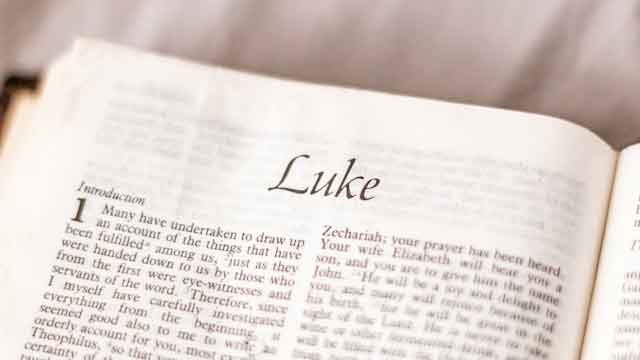
The Pharisees want to catch Jesus out with Sabbath rules, when he is bringing true Sabbath rest! He comes to restore his kingdom of rest.


The Pharisees want to catch Jesus out with Sabbath rules, when he is bringing true Sabbath rest! He comes to restore his kingdom of rest.
On a Sabbath, while he was going through the grainfields, his disciples plucked and ate some heads of grain, rubbing them in their hands. 2 But some of the Pharisees said, “Why are you doing what is not lawful to do on the Sabbath?” 3 And Jesus answered them, “Have you not read what David did when he was hungry, he and those who were with him: 4 how he entered the house of God and took and ate the bread of the Presence, which is not lawful for any but the priests to eat, and also gave it to those with him?” 5 And he said to them, “The Son of Man is lord of the Sabbath.”
6 On another Sabbath, he entered the synagogue and was teaching, and a man was there whose right hand was withered. 7 And the scribes and the Pharisees watched him, to see whether he would heal on the Sabbath, so that they might find a reason to accuse him. 8 But he knew their thoughts, and he said to the man with the withered hand, “Come and stand here.” And he rose and stood there. 9 And Jesus said to them, “I ask you, is it lawful on the Sabbath to do good or to do harm, to save life or to destroy it?” 10 And after looking around at them all he said to him, “Stretch out your hand.” And he did so, and his hand was restored. 11 But they were filled with fury and discussed with one another what they might do to Jesus.
This transcript has been automatically generated
Luke chapter 6, starting at verse 1. On a Sabbath, while he was going through the grain fields, his disciples plucked and ate some ears of corn, rubbing them in their hands. But some of the Pharisees said, why are you doing what is not lawful to do on the Sabbath? And Jesus answered them, have you not read what David did when he was hungry, he and those who were with him? How he entered the house of God and took and ate the bread of the presence, which is not lawful for any but the priests to eat, and also gave it to those who were with, with him.
And he said to them, the Son of Man is Lord of the Sabbath. On another Sabbath he entered the synagogue and was teaching, and a man was there whose right hand was withered. And the scribes and the Pharisees watched him to see whether he would heal on the Sabbath, so that they might find a reason to accuse him. But he knew their thoughts, and he said to the man with the withered hand, Come and stand here. And he rose and stood there.
And Jesus said to them, I ask you, is it lawful on the Sabbath to do good or to do harm, to save life or to destroy it? And after looking around at them all, he said to him, stretch out your hand. And he did so, and his hand was restored. But they were filled with fury and discussed with one another what they might do to Jesus.
It’s Friday, Friday, gotta get down on Friday. Everybody’s looking forward to the weekend, weekend. Friday, Friday. Getting down on Friday, everybody’s looking forward to the weekend. For the uninitiated, that’s Rebecca Black’s 2011 song Friday.
And speaking of that longing for the weekend, and perhaps given a bit more substance, it could have been sung in ancient Israel because their weekly life was shaped towards Friday evening to Saturday evening and the Sabbath. Many of us might have heard of the Sabbath, the weekly day of rest on the 7th day, but that’s just the tip of the iceberg, and the whole calendar, um, was Sabbath-shaped. So as well as the Sabbath, you also had the Sabbaths, that is the 7 festivals or holy days, holidays of Israel in the ancient times. 3 of them lasted 7 days: Then you had the Sabbath year every 7th year, where even the land itself, um, got a rest. And on top of that, you had the Jubilee years, and they come around every 7th set of Sabbath years, so every 49 years.
And it’s more than what I remember celebrating at the king— the king— the Queen’s Golden Jubilee with my Victoria sponge cake and a waving little flag at primary school. And this was a sort of super duper Sabbath, something people waited for their whole lives, where debts were forgiven, land and property were redeemed, and the poor were released from bondage. For most, it was a once-in-a-lifetime picture of the promise of the ultimate rest of God to come.
I had a friend growing up who was obsessed with Chelsea Football Club. He knew all their history. He He knew every significant game they played in and the score and significant moments, and he knew most moments of every other game they’ve ever played, or at least that he’d watched. And his life was shaped around their fixture schedule, the transfer window, trophy season. And in fact, now he actually works for Chelsea, so he’s living the dream.
And Jesus coming and establishing his promised kingdom his Sabbath rest should have been that dream moment for Israel. And the Sabbath rest of God, it’s much more than no work and Netflix and nights out. Here’s 7 Rs of the Sabbath for you. Had to be 7. 7: rest.
Although it’s more than rest, it’s not less than rest. And the concept of Sabbath goes all the way back to creation on the 7th day where God rested from his initial creating work. It’s about rest, but it’s also about rescue. Although people might have followed a 7-day pattern before this, the Sabbath day for Israel was only instituted officially after they were rescued from being slaves in Egypt. And from then, then on, it’s tied up with the idea of rescue, a rescue from slavery to Sabbath rest.
But not only being rescued, it’s about relationship. It’s about a relationship with God, which is what they and what we all are made for. And it was symbolised every week on the Sabbath as Israelites met basically for church, and on a Saturday, a set-aside time where they heard from God together. But it’s also about representing God. Observing the Sabbath and Sabbaths was a key marker, marking them out as the special people of God.
It was a membership card of heaven. Then it’s about reflecting God. The Sabbath was not just an opportunity for Israelites to rest, but it allowed them to give rest to others as well. They’re commanded to give the whole household, their employees, even people travelling through, even animals, the chance to rest on the Sabbath. They could reflect God in giving rest.
And it was also about refuge, and that’s important for understanding our passage this evening. And God granted Israel’s greatest king David rest, and that is when he’d secured them safely in their land and subdued all their enemies around them. It stands for refuge and peace at home and abroad. And lastly, it’s about rule. And so from a God-given gift of rest Israel, Israel had.
And under him, they were to exercise godlike rule. As they enjoyed the rest of God, they could lead the world into finding that rest as well.
And one of the reasons Jesus is such a big deal is that he comes on the scene and he says, I am bringing that promised rest. In his manifesto, we just together a few moments ago. And he says he came to proclaim liberty or forgiveness to the captives, to proclaim the year of the Lord’s favour. And this is the Jubilee you’ve been waiting for. And that’s what he’s been demonstrating in the last 3 chapters.
And it comes to a climax in our passage. And the question is, will people see it and enter into it, or will they not?
So first we see that Jesus establishes himself as the rest-giving king. And notice as we read these verses again how he uses this confrontation to make it all about himself. Verse 1: On a Sabbath, while he was going through the grain fields, his disciple plucked and ate some ears of corn, rubbing them in their hands. But some of the Pharisees said, Why are you doing what is not lawful to do on the Sabbath? And Jesus answered them, have you not read what David did when he was hungry, he and those who were with him, how he entered the house of God and took and ate the bread of the presence, which is not lawful for any but the priest to eat, and also gave it to those who were with him?
And he said to them, the Son of Man is Lord of the Sabbath.
So essentially here, Jesus’ disciples, they do something that the Pharisees think will stop them bringing in God’s Sabbath rest, and they actually appear to have a point. And because that’s how all heresies appear, they have to look at least truthful in parts to be convincing. And breaking the Sabbath law in some cases, um, did involve the death penalty, which seems pretty extreme. But the disciples themselves would have seen that as proportionate, and because it symbolised a rejection of God’s rescue, and it puts the whole nation at risk from being cut off from the Lord.
Yet on the other hand, it’s not even clear the disciples are breaking any law here, just extra restrictions, and the over 1,000 restrictions that sects like the Pharisees put in place as an extra barrier to stop them breaking the actual Sabbath. It is right you aren’t allowed to harvest or do any serious work on the Sabbath, but it’s not like the disciples are revving up combine harvesters here to go in the grain fields. And whatever is the exact legal case, Jesus responds on a whole other level anyway. Um, he brings a spiritual gun to a knife fight, and he brings up this famous incident in Israel’s history of their most prominent king, David. And he says, have you read it?
Like to my friend, um, did you know the score this weekend? And David was fleeing King Saul, and he ate bread from God’s tabernacle, which only priests were permitted to eat. And he was— as he was on his mission to bring God’s rest to his people. And Jesus’ point is this here, and he says he is the greater David on a greater mission, bringing a greater rest. And if it was permitted for David and his men to eat, how much more would it be permitted for the promised fulfilment of David and his men to do a similar thing?
And this is no ordinary mission. Jesus is communicating, I am the rest-giving King. But he goes on further to essentially say that explicitly in verse 5. And he said to them, Son of Man is Lord of the Sabbath.
Now I hope you’re not quite like me and waste some of your time on YouTube edits of amazing sporting events. I can get a little bit lost there sometimes. And one of the trends in the last few years are the videos are titled I Am Him moments. I don’t know if you’ve seen them, when someone reveals how great they are at a particular sport and by a particular performance or moment. So in basketball, for example, someone might, um, score a game-clinching or game-winning shot as the buzzer goes, and often straight after that they might even say to the camera, I am him, or this is my house, or something like that.
It’s essentially extremely arrogant, um, isn’t it? But that’s what Jesus is saying here. He’s saying, look what I’ve done, and since I’ve come on the public scene— and he’ll back it up further in a moment. He says, I am the Son of Man. I am God’s final king bringing in God’s final kingdom.
I am the Lord of the Sabbath. God gave rest to David and his nation. I am the king who gives my own personal rest to you. I am the Lord of all. I made the Sabbath and I made it for my kingdom.
And you’re trying to nitpick about Sabbath rules, and when the Lord of the Sabbath is right there But the King who gives rest is standing right in front of you.
So Jesus comes as the Lord, but as a man in history, fulfilling all that history up to that point had pointed towards. And yet he was missed by so many who didn’t see him. And that’s tragically repeated down to this day.
And in some sense, in the UK today, we’re not a million miles away from Israel’s situation. In some senses. And we’re a nation built on biblical principles. We’re still about 50% of the country identifying with them in some way. And we have the relics of religion all around us, with parish churches in nearly every parish boundary in the country, covering every square inch of land.
And lots of our public buildings are adorned with Bible verses. Yet we largely ignore the person ultimately, in one way or another, behind it all, and the Lord Jesus Christ. Religion is not enough, and being outraged at graffiti in Canterbury Cathedral is not enough. We need more.
A friend of mine went to school where they had to go to chapel every day, and he calculated that he’d been to a church meeting of some sort over 2,500 times before he came to consider the Lord Jesus for himself. And when he was 18, his sister, instead of simply calling herself a Christian— and she’d gone to live away from home— and she started taking the Lord Jesus seriously for herself. And she came back, and my friend said it changed her life, and she’d found the rest of God. And he thought that he’d better read the gospel properly for himself as an adult, as an 18-year-old. And because he’d never done that before, and he was shocked because even though he’d heard the Bible his whole life, he thought it was all about morality.
Jesus did teach morality, he found, but most of all, and mainly in fact, he spoke about himself. And my friend thought he was either the most arrogant person who ever lived, and all what he said was true. And he came to believe and be convinced as he read and investigated further that Jesus was who he said he was, and it changed his life, and he found the rest-giving King. And Jesus said to the Pharisees, and he says to us today, that he is the Son of Man, and the Son of Man is Lord of the Sabbath.
But how does he give rest? Well, he does that, and by restoring his rest-giving kingdom. Which we see on the next Sabbath event in our passage, verses 6 to 11. And I don’t know about you and how you are handling, sort of handling tense situations, whether you’ve ever put out the awkward turtle or something like that. But let’s see, imagine you were here as we walk through these verses again.
Verse 6: On another Sabbath, he entered the synagogue and was teaching, and a man was there whose right hand was withered. And the scribes and the Pharisees watched him to see whether he would heal on the Sabbath, so they might find a reason to accuse him. I mean, taking a step back, this is sort of a mind-blowing incident, isn’t it? There’s a man in the congregation there with a withered hand, and that’s a serious condition for anyone, but a particularly serious condition to someone living in that day and age who largely would have to— in a society where they largely had to use their hands for work. And Luke points out that’s his right hand in particular that’s withered, which is a symbolic picture of a lack of strength and capability.
And the Pharisees and the scribes, they know Jesus is there and they know he has the power to heal. In fact, they hope he does, and they’re hoping he’ll heal this man, but not for his good. But so they can accuse Jesus of breaking the Sabbath and being a spiritual traitor, possibly to justify putting him to death. But unfaithful Jesus raises the stakes again. Verse 8: But he knew their thoughts, and he said to the man with the withered hand, come and stand here.
And he rose and stood there. And Jesus said to them, I ask you, is it lawful on the Sabbath to do good or to do harm, to save life or to destroy it.
And as with the healing of the paralytic a few weeks ago, if you were here for that, Jesus knows the thoughts of their hearts as he knows the inner thoughts and intentions of all of our hearts, and we can’t hide anything from him. And instead of taking the easy route out and healing him in the evening after the Sabbath ended, or more discreetly He stops whatever’s happening in that meeting and he calls the man right into the middle of the room. Imagine if we did that this evening. And so everyone can see and no one can be in doubt about what he’s doing and saying. And then, like Ivan Toney taking a penalty for England, he sort of eyeballs them up as he kicks the ball in.
Verse 10: And after looking around at them, he said to them, stretch out your hand. And he did so, and his hand was restored. Jesus restores the man’s hand. He effectively restores his life and gives him rest from that infirmity, allowing him to get on effectively and live his life. But notice here the test has flipped around completely, and the question isn’t now, will Jesus heal on the Sabbath?
The question is, are the Pharisees on the side of the Lord of the Sabbath or not? Do they want to see good done and lives saved, or do they want to see harm done and lives destroyed? And verse 11 answers that conclusively: But they were filled with fury and discussed with one another what they might do to Jesus.
Jesus is fulfilling the promise of the Sabbath before their eyes, and instead of the joy that should bring them, they’re filled with fury.
But what does our author Luke want us to be certain about here? Well, in this incident we see the ultimate Sabbath rest that Jesus will achieve in the future, which one day this sort of thing can happen to all people who turn to him. And the resurrection of Jesus to come, it proves that one day he will restore all of our bodies in the final resurrection and Sabbath rest to come. At the previous church I was part of, there was an older woman there called Dorothy, and she had a very difficult life. And she was confined to a wheelchair and was in constant pain, and she couldn’t always make it to church.
But on Easter Sunday, she came in and she was beaming, and the pastor commented on how happy she looked. And she said something like, I love Easter Sunday. It’s reminds me that one day I’ll have new legs.
And it’s easy if we’re relatively young and healthy and affluent to make little of such things like that, but they will mean a lot to us sooner or later as we see loved ones suffer or experience suffering ourselves. This hand restoration is a picture in part of that final restoration to come, which we can have certainty about in light of the resurrection. But it’s not just a then thing, it’s a now thing. Just put yourself in that man’s shoes for a moment and imagine what it would have been like for him. And from withered hand to working hand, restored— as we said, it would have changed his life.
And what sort of thing do you think he’d be feeling or be going through his head, um, after this happened? And this is a picture for what’s available for everyone who comes to Jesus now, and restored to rest with God and the implications of that.
And we certainly live in a restless world, don’t we, where we’re desperate for rest and we can look for it in all the wrong places. I’m endlessly scrolling, and when life gets too much, thinking just one more episode will help us switch off or relax. Or just one type of example on a much bigger scale in our era, which is dominated by sexual expression, is that we think when we reach one form of sexual expression, we’ll be at rest, we’ll be at peace. Whether that’s if we marry the right person or we come out publicly in one way or another and feel we can be our true selves, or this is the lie of transgenderism. And that if we feel restless in our own bodies, that we don’t feel right, we’ll be at rest if we seek to change them.
And when Ellen Page transitioned to Elliot Page and was put on the front of Time magazine, the headline quotation was this: I’m fully who I am. I’m fully who I am. And she is expressing that she felt restless living as a woman, And but now she feels at peace, at rest with her new self, and now she can live out her potential.
And that’s a hopelessly sad thing to see, except it’s not hopeless. And Jesus is the answer to all those types of longings which we’ll all experience in one way or another. And he is the God who made us for rest with him.
And many of us may be following the Lord Jesus this evening, and maybe parts of our lives still feel restless, or we can be tempted to feel restless. And he invites us to keep coming to him. And we can have a relationship with Jesus today, but there’s an ongoing work of restoration, um, worked out in all of our lives. As we keep coming to him.
If I think about back my— if I think back about myself as a Christian 10 years ago, 5 years ago, even 2 years ago, or even more recently, I’m so thankful for the continual work the Lord Jesus does in restoring me and my life because I need it. And maybe that’s a good question to ask one another afterwards. What ways has the Lord Jesus restored our lives? If we don’t yet know him, ask someone who does. What difference has knowing the Lord Jesus made to your life in the last 2 years, or whatever time frame you want to give?
So it’s not just for the future, um, it is for now. But it’s also not just for the individual, um, but it’s for the corporate as well. And Jesus bringing in his kingdom also restored the people of God collectively. And this is absolutely key in history and for the work of God in the world. And God’s people Israel, when Jesus came, were in a real mess in many ways.
Instead of representing and reflecting God’s rest, they had largely abandoned relationship with God that gave them that privilege, and they’re corporately spiritually impotent. Their right hand was withered, as it were. They had no power or capability to do their God-given role, that is, to make God known to the world. And restoring this man’s arm at this place, in this time, at this point in his ministry, and Jesus is symbolising the restoration he’s bringing in to the whole people of God so they can be restored to do his kingdom work, and which is the reason eventually today why any of us have received rest from the Lord. And there and then, he is forgiving their sins and establishing the rest with God they were waiting for, so they could go out and proclaim that forgiveness and rest to the world.
That is God’s purpose for his people. And if we follow Jesus, it’s not just about an individual thing. And we get the privilege of joining a movement, a people, a kingdom which isn’t simply about rest for ourselves but wants others to receive that rest as well. And the Pharisees and the scribes representing the elite leaders of Israel could not be more out of line with that in this passage. They were furious at just one example of Jesus giving someone rest.
So we see in the next section that Jesus continues to restore his kingdom by replacing that leadership as he selects 12 apostles to lead his newly restored kingdom mission. And they succeed in the last 2,000 years in ways that the previous 2,000 years of God’s people could scarcely have imagined. Jesus is the rest that people need, and he’s willing to give it to all who come to him. He restores the image of God in all of us individually and corporately. He gives us refuge with him now and beyond the grave, and he gives us the privilege of joining his kingdom team proclaiming his rest to a world that really, really needs it.
Jesus said that he, um, the Son of Man, is Lord of the Sabbath. Let me lead us in prayer.
Our Father, thank you that you sent the Lord Jesus to bring in your Sabbath rest. Thank you that we don’t have to live restless lives but can find our rest in you now while we wait for perfect rest to come. And thank you for the privilege of being part of your restored kingdom which proclaims your rest to the world. And we ask that you might use us to do that in the next weeks and months ahead. Amen.