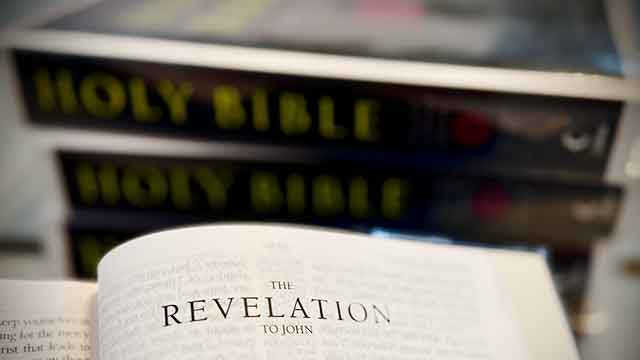
Talk 2 in this Revelation weekend away series.

elementor domain was triggered too early. This is usually an indicator for some code in the plugin or theme running too early. Translations should be loaded at the init action or later. Please see Debugging in WordPress for more information. (This message was added in version 6.7.0.) in /mnt/customers/customers-bh-108dcf/575c8d22-9e37-4570-b449-7bc62225f920/wp-content/wp-includes/functions.php on line 6260

Talk 2 in this Revelation weekend away series.
8 “And to the angel of the church in Smyrna write: ‘The words of the first and the last, who died and came to life.
9 “‘I know your tribulation and your poverty (but you are rich) and the slander of those who say that they are Jews and are not, but are a synagogue of Satan. 10 Do not fear what you are about to suffer. Behold, the devil is about to throw some of you into prison, that you may be tested, and for ten days you will have tribulation. Be faithful unto death, and I will give you the crown of life. 11 He who has an ear, let him hear what the Spirit says to the churches. The one who conquers will not be hurt by the second death.’
12 “And to the angel of the church in Pergamum write: ‘The words of him who has the sharp two-edged sword.
13 “‘I know where you dwell, where Satan’s throne is. Yet you hold fast my name, and you did not deny my faith even in the days of Antipas my faithful witness, who was killed among you, where Satan dwells. 14 But I have a few things against you: you have some there who hold the teaching of Balaam, who taught Balak to put a stumbling block before the sons of Israel, so that they might eat food sacrificed to idols and practice sexual immorality. 15 So also you have some who hold the teaching of the Nicolaitans. 16 Therefore repent. If not, I will come to you soon and war against them with the sword of my mouth. 17 He who has an ear, let him hear what the Spirit says to the churches. To the one who conquers I will give some of the hidden manna, and I will give him a white stone, with a new name written on the stone that no one knows except the one who receives it.’
18 “And to the angel of the church in Thyatira write: ‘The words of the Son of God, who has eyes like a flame of fire, and whose feet are like burnished bronze.
19 “‘I know your works, your love and faith and service and patient endurance, and that your latter works exceed the first. 20 But I have this against you, that you tolerate that woman Jezebel, who calls herself a prophetess and is teaching and seducing my servants to practice sexual immorality and to eat food sacrificed to idols. 21 I gave her time to repent, but she refuses to repent of her sexual immorality. 22 Behold, I will throw her onto a sickbed, and those who commit adultery with her I will throw into great tribulation, unless they repent of her works, 23 and I will strike her children dead. And all the churches will know that I am he who searches mind and heart, and I will give to each of you according to your works. 24 But to the rest of you in Thyatira, who do not hold this teaching, who have not learned what some call the deep things of Satan, to you I say, I do not lay on you any other burden. 25 Only hold fast what you have until I come. 26 The one who conquers and who keeps my works until the end, to him I will give authority over the nations, 27 and he will rule them with a rod of iron, as when earthen pots are broken in pieces, even as I myself have received authority from my Father. 28 And I will give him the morning star. 29 He who has an ear, let him hear what the Spirit says to the churches.’
This transcript has been automatically generated
So we’re reading from chapter 2, starting at verse 8, uh, until the end of the chapter. And to the angel of the church in Smyrna write the words of the First and the Last, who died and came to life. I know your tribulation and your poverty, but you are rich. And the slander of those who say that they are Jews and are not, but are a synagogue of Satan. Do not fear what you’re about to suffer.
Behold, the devil is about to throw some of you into prison, that you may be tested, and for 10 days you will have tribulation. Be faithful unto death, and I will give you the crown of life. He who has an ear, let him hear what the Spirit says to the churches. The one who conquers will not be hurt by the second death. And to the angel of the church in Pergamum write the words of him who has the sharp two-edged sword.
I know where you dwell, where Satan’s throne is. Yet you hold my name fast, and you did not deny my faith even in the days of Antipas, my faithful witness who was killed among you where Satan dwells. But I have a few things against you. You have some there who hold to the teaching of Balaam, who taught Balak to put a stumbling block before the sons of Israel so that they might eat food sacrificed to idols and practise sexual immorality. So you have some who hold to the teaching of the Nicolaitans.
Therefore repent! If not, I will come to you soon and war against them with the sword of my mouth. He who has an ear, let him hear what the Spirit says to the churches. To the one who conquers, I will give him— I will give some of the hidden manna, and I will give him a white stone with a new name written on the stone that no one knows except the one who receives it.
And to the angel of the church in Thyatira write the words of the Son of God, who has eyes like a flame of fire, whose feet are like burnished bronze: I know your works, your love and faith and service and patient endurance, and that your latter works exceed the first. But I have this against you, that you tolerate that woman Jezebel, who calls herself a prophetess and is teaching and seducing my servants to practise sexual immorality. And to eat food sacrificed to idols. I gave her time to repent, but she refuses to repent of her sexual immorality. Behold, I will throw her onto a sickbed, and those who commit adultery with her I will throw into great tribulation unless they repent of her works.
And I will strike her children dead, and all the churches will know that I am he who searches mind and heart, And I will give to each of you according to your works. But to the rest of you in Thyatira who do not hold to this teaching, who have not learned what some call the deep things of Satan, to you I say, I do not lay on you another burden. Only hold fast to— only hold fast what you have come and what you have until I come. The one who conquers and who keeps my works until the end, to To him I will give authority over the nations, and he will rule them with a rod of iron, as when earthen pots are broken in pieces, even as I myself have received authority from my Father. And I will give him the morning star.
He who has an ear, let him hear what the Spirit says to the churches. And we’re going to focus on that letter to Pergamum. You can maybe ask me if you want in the question time We could talk a bit more about some of the other letters, but there in that picture at the top, that’s Rome, the world’s first mega city. This place ran the empire that ruled the world, and it’s very hard for us, I think, to get our heads round the sheer reach of Rome. If you think about it, every aspect of the New Testament storey from Jesus’ birth onwards— remember that census from Caesar Augustus.
All of it is played out under the dominating influence of what they call the Eternal City. Domitian was probably the emperor when Revelation was written. He was from the family that actually built the Colosseum, and as Roman emperors go, he was definitely on the mad and tyrannical end of the spectrum. Apparently liked people to call him the Lord and God. So if you wanted to grab people back then with a vision for something bigger than the glory of Rome, you would be stretched to do it.
But Revelation holds out a bigger vision, a bigger person with eyes like fire, feet like bronze, a voice like the roar of many waters. He truly owns titles like Eternal, Lord and God, the first and the last. We heard last night he died and came to life. And notice how 2:12 joins the dots between the person that we met last night and the words that we’re about to hear. So 2:12, the words of him who has the sharp two-edged sword: I know where you dwell.
I’ve got a very sharp sword and I know where you live. How do you feel about a message like that? Coming through on the WhatsApp. Well, big Jesus. How big is your Jesus?
He was very big when he made his entrance in Revelation 1. We can expect his words to be piercing and pastoral because I know— well, that’s the empathy of the one who walks amongst his precious churches. These letters are about specific first-century churches. But by Jesus’ Spirit, they’re what he says— present tense— to his churches— plural— all of them. Hence, he who has an ear— literally anyone who has an ear, not just them, all of us.
If you want to give this message a title, In the World but Not of the World would be a good one. Have you managed to nail that? Craig, yeah, we’re in our first point. Verse 13, I know where you dwell. See, Jesus knows, he gets what it’s like where you live and work, how hard it is to stay faithful there.
Why was it so difficult for them then? Verse 13, I know where you dwell, where Satan’s throne is. End of that verse. And to pass my faithful witness who was killed among you where Satan dwells. You know, you sometimes get these, uh, signs when you arrive in a certain town.
Welcome to Torquay, birthplace of Agatha Christie. You know, it’s kind of moderately interesting. It’s on the sign. And in America, you know, welcome to Harbour Island, home of friendly people. That’s nice.
Well, how about this? Welcome to Pergamum, where Satan dwells. Of course, it wouldn’t say that on the road sign. That wouldn’t be Satan’s style. It certainly wasn’t the only place he was active.
So Smyrna, back into verse 9. So they had this place they called the synagogue of Satan. And verse 10, spot who was behind the imprisonment of the Christians there. It’s been said the greatest trick the devil ever Pulled was persuading the world he doesn’t exist. Do you believe in Satan?
Why is Pergamum in some sense his particular regional HQ? That’s where his throne is. Well, one Christian at least has been killed there, but still, why Pergamum, the place where Satan dwells? Lots of reasons are suggested. The city was the HQ of emperor worship.
There was also a huge altar to Zeus on the hillside. Apparently it looked a bit like a throne. Pergamum was also a centre of mystical healing powers. There was one temple where you stayed overnight and snakes that were thought to have therapeutic powers crawled all over your body. Thankfully the NHS doesn’t have the funding for snake therapy, but really weird stuff at Pergamum.
Which also was famous for its library to the goddess of wisdom. They had gods of money and power and sex. I think any or all of the above fits the bill, because do you remember Satan’s main weapon of choice since Genesis 3 onwards? Lies. And it’s the same every time he appears in Revelation 2:9, that synagogue of Satan.
What was he doing there? Slandering. 2:24, the deep things of Satan are about teaching. 3:9, again, it’s about lies. And whenever he pops up in Revelation chapter 12, he’s the deceiver of the world.
Again in chapter 20, thrown into a pit that he might not deceive again. Pergamum was deception central. And London is clearly not as bad. We’ve been thoroughly Christianized for hundreds of years. But if you want to worship a potpourri of religious idols, or bow to the altar of human reason, or gods of money or sex, you’ve come to the right place.
Welcome to London, where Satan dwells.
Don’t get me wrong, I think cosmopolitan cities are brilliant. I really love London. I love raising our kids in an environment where they get to know about other countries and religions, not from reading books, but from their little buddies who are from all over the world and varied faiths. You know, whenever England play a big match, whether it’s against Italy or France or whatever, our Rory has some interesting theological debates with his classmates about which country God supports in the football Clearly not England so far.
And that’s so brilliant. And Ukrainians, you know, Russians, they’re all there. And, and yet cosmopolitan cities can be dangerous places because they tend to be this density of the suppression of the truth about God. And sometimes in the face of that, Christians have retreated, seen cities as evil, universities and culture to be avoided, don’t mix with the world. That’s not Jesus’ plan.
He wants his lampstands shining right in among the dark place, and Pergamum church seemed to have got that. Verse 13: I know where you dwell, where Satan’s throne is, yet you hold fast to my name and you don’t deny my faith, even in the days of Antipas, my faithful witness, who was killed among you where Satan dwells. They dwell where Satan dwells. But they’re not criticised for it. Actually, in this marketplace of idolatry and weirdness, the Christians were right in the mix, unashamed witnesses holding fast, one of them at least faithful unto death.
But even persecution doesn’t seem to have sent these believers into retreat, and I think that makes Pergamum church inspiring for us. So yeah, there are worldviews in London where Satan dwells. But Jesus hasn’t called us to withdraw. He has called us to faithful witness in our city. So hang out with the work colleagues and the other families from the school.
Join the running club or the book club or the bubble tea drinking club, whatever it is you’re into. In the world but not of the world, but really in the world. Because there’s a higher throne than Satan’s. There are truer and more powerful words than his. Jesus defeated the devil when he died and came back to life.
And as his faithful ones bear witness to his name, strongholds of the devil’s lies are being conquered. Praise God! Desk by desk, house by house, all over London. But point 2, verse 14: I have a few things against you. Really, in the world but not of the world can feel like such a difficult one to pull off, can’t it?
Verse 14: You have some there who hold the teaching of Balaam, who taught Balak to put a stumbling block before the sons of Israel so that they might eat food sacrificed to idols and practise sexual immorality. So you also have some who hold to the teaching of the Nicolaitans.
Shouldn’t surprise us that false teaching entices God’s people when they dwell where false teacher Satan dwells, but we shouldn’t think that’s okay.
This describes a church that seems generally to be holding fast to Jesus, but some there hold to teachings that Jesus is against.
And you notice the way here how the whole community are rebuked. So I have a whole— I have a few things against you, whole church. You have some there who hold the teaching of Balaam. See, it’s not enough just to say, well, I’m faithful, if a brother or sister sitting next to you believes the wrong stuff. Jesus thinks that’s all of our problem.
So what’s this teaching Jesus hates? Well, it’s a bit like the teaching of Balaam. The Nicolaitans seem to be the modern equivalent. Balaam, you might remember, was this freelance prophet. You could hire him out to rain down curses on your enemy.
Foreign King Balak hired Balaam to curse Israel, but the book of Numbers recounts this kind of comedy scene where every time Balaam tries to open his mouth to say, curse you, Israel. Literally, the words come out as, bless you, Israel. It’s like trying to tell someone, you know, I hate you, I hate you, but every time you speak, you actually say, I love you, I love you. It’d be kind of annoying. And eventually, the guy who hired him says, look, shut up.
It’s better that you say nothing if all you’re gonna do is bless my enemies. Well, full-frontal cursing of God’s people didn’t work back then, but Balaam had a more subtle plan. He got some foreign women to say to Israel, come and sacrifice to our god too, which they did. How does God describe that behaviour? Well, whoring is what he says in Numbers.
His people were two-timing him.
Come back to Pergamum, where Satan’s full-frontal persecution hasn’t particularly worked. The devil has another plan: seduce the Christians not to give up God, but middle of verse 14, to eat food sacrificed to idols. That’s what the Caesar worshippers and Zeus idolaters did in the trade guilds and the cafes of Pergamum— superstitious sacrifices to so-called gods who might help you or harm you. May well have been a sexual element to some of their rituals. But the end of verse 14 is a description also of how God views it spiritually when his people bow to other gods.
It’s immorality, adultery against him.
Satan’s tactic in the Old Testament and in Pergamum and in London is not primarily stop being Christian or we’ll kill you. The history of the church generally is that martyrdoms tend to bring more church growth. That’s even happening in North Korea today. It’s absolutely extraordinary. But if you teach them it’s okay to worship God and compromise with the idols of the day, when Satan adopts that battle plan, oh, he can destroy whole churches and they don’t even notice it.
The Bible’s great, but God doesn’t understand the realpolitik. You have practical needs. Your providers are all down at the temple. You should be there too if you want to keep your job. Jesus will understand.
It might be family pleasing. That means we continue to practise their religion when we’re with them as well as holding to Jesus. Our need for acceptance or comfortable career progression means we sign up to London’s values of all faiths and lifestyles being equally good. We’re not saying stop being a Christian. It’s just so awkward when you don’t join in.
It can’t be that important, can it? No one else thinks it is.
And it may just be as basic as end of verse 14, sexual desires that mean we redefine our ethics to justify behaviour that Jesus calls immorality. Hello, Church of England.
Now, if we read on in the letters to the 7 churches, we’d see that it gets much worse when a Christian community starts to tolerate teaching in their midst that actually promotes any of that. That’s Thyatira, the next church. Sadly, it’s a trajectory through the next couple of churches. Thyatira has a few false teachers at the front. By Sardis Well, there’s only a few left unstained who’ve not gone off the rails.
Sadly, that’s a common direction of travel, and that’s why the message to Pergamum church is so urgent for them and for us. Verse 16: Therefore repent. This is point 3. Repent means change.
And again, notice he’s talking to the whole church. If not, I will come to you soon and war against them.
What does it mean, I wonder, for a whole community to repent when most of them are trying to be faithful? Well, can I suggest a couple of things? You may want to jot these down, and I hope it’s stuff that we can develop and talk about later on. First, I think it means self-examination, because the reality is we’re all immersed in the lies of London, the work culture, the peer pressure. Then there’s the particular weirdnesses of your particular family or home nation.
We need to keep saying sorry for the ways that the lies have shaped us. We need to keep taking every thought captive. So please, please, can the first thing we do in application with this not be, oh, those other churches, or even there’s other Christians in our church, but a bit of self-examination of what’s in here.
Second, if we are going to stay faithful and shine in the world, please keep thinking that teaching matters. Satan really thinks that teaching matters. It’s his big weapon, teaching. If you’re here, it’s great. It suggests you think that teaching matters.
St. Alan’s, how wonderful to being a church that has a reputation for teaching well. And I don’t just mean that at the kind of institutional level. One of the things I love about coming on a weekend like this is that you sense from people that real hunger to be fed well and anticipation about being taught well. It’s such a great thing. And yet, don’t you find— well, sometimes I can find myself either thinking, are we a bit weird be so into teaching.
Or maybe even more, it can be easy to do the things that we do but forget why they’re so screamingly serious. So, you know, the way Ukraine— you know, see again this morning, more planes are going to be sent to them. They’re just so grateful for any equipment that can be used against their big enemy at the doorstep. I wonder if I can be a bit blasé. Just another sermon, it’s just another Bible study, just another quiet time.
These basic disciplines, they are— these are our vital weapons if we’re not going to be swallowed alive spiritually. So it’s not just another whatever, it’s just exactly the way Jesus equips his people for our war against Satan’s lies. Or do I not think I’m capable of being deceived.
And there may be even more direct application here. So if you’ve started to justify compromises that Scripture is against, Jesus, who loves you, says stop it before he comes to judge. Verse 16: If not, I will come to you soon and war against them with the sword of my mouth. Do you have a big enough Jesus to take that warning seriously. And then all of us, stop doing nothing when you see brothers and sisters wandering.
Remember, most of them in Pergamum church were holding fast, but all of them criticised. I take it because of that trajectory into the other churches and where that trend can lead us.
And it’s not that you have to suddenly see yourself as, you know, I’m everyone else’s admonisher-in-chief now or something like that. But in love, calling out dangerous teaching and teachers from the front, if that’s your role in the small group, and informally in our friendships to say in love, I’m worried about that teaching, I’m worried for you.
And I’m aware that that kind of correction is very difficult for most of us to do naturally. It is for me hard culturally to tell anyone they’re wrong about anything, especially in the realm of religion. But no one’s shouting here or foaming at the mouth. It’s just we believe Jesus when he says that there’s some teaching out there that could be really dangerous for folk.
Verse 17, he who has an ear, let him hear what the Spirit says to the churches. Do you know, that’s quite a settling line for me because it reminds me who’s talking. It’s Jesus by his Spirit. We don’t need to panic. We don’t need to make this about us.
It’s Jesus that people need to hear, and our job is just to keep pointing each other to his good voice. I was wondering, you know, when I bottle out of it or refuse to ever lovingly challenge where I think someone else has been led astray? Is it because I’ve forgotten how good Jesus’ true words are for them? Verse 17 again: To the one who conquers, I will give some of the hidden manna, and I will give him a white stone with a new name on the stone that no one knows except the one who receives it. Manna was God’s provision in the desert.
The devil’s most basic lie: God’s not a good provider. False teaching, you know, it always thrives on discontent.
And this promise at the end here of this little letter says whatever you’re looking to London to give you, Jesus’ promises are better and longer lasting. I don’t know what the white stone is, sorry. But it’s definitely something good because it’s from Jesus and it’s quite personal in the way it’s described. And he is all give, give, give. You know, Satan can never win when the churches are really convinced that God is so good.
So permission for you to remind me of how good he is. When you see me wandering, and permission to care about what each other believe. Jesus really thinks we should care.
So anyone who has an ear, let them hear what the Spirit says to the churches. Amen. And we’ve now got time, I think we’ve got about 10 minutes or so for questions to Kev. Come back up. And just let me start by saying, I’m sure we’ll say it many times, you’ve said twice now, um, how thankful you are for partnership with St Helen’s.
We are so thankful for partnership with you, brother, um, for, well, years of, um— Oh, you’re nice, aren’t you? Nice man. Well, rendered a bit speechless on that. People aren’t normally so— Can we use the place? Yeah, go on.
You had to take them. Sorry to interrupt you. No, it’s fine. My, my, my, um, My face. I think we’re all friends enough that we can take questions from the floor, but if you feel like you can’t just do that, just write down your question, give it to me later, I’ll make sure Kev gets it at some point.
So, don’t feel like you have to say it from the floor, there will be opportunities in every session to ask questions, so there’s lots of time for questions. Kev, let me start just saying Pergamum, why choose that for us here? You said, oh yeah, yeah, I mean, I didn’t spend too long thinking, oh, what’s the one church that the 10 AM crowd at St. Helen’s are most like? I think Pergamum, because you’ve got a bit of the suffering stuff that connects to the previous letter to Smyrna, and then you’ve got the seeds of the false teaching problem that connects into next 2 letters, it sort of helps you get the main stuff going on in most of the churches, which seems to be that they’re either going to go quiet through suffering— that’s Smyrna and Philadelphia— or that they’ve got some sort of false teaching problem, that they’re being seduced by Rome in that sense. So that’s the middle 3.
The middle 3 churches are a trajectory on that. And then you’ve got on the outside of that, you’ve got Smyrna and Philadelphia, and it’s like a sort of sandwich structure, I think. So, and then, and then the final layer is Ephesus, the first one, and Laodicea. They both seem to have just a very basic problem in that they’ve stopped— well, Ephesus lost its first love, they’ve stopped loving Jesus. Laodicea have stopped praying to Jesus, so they get the strongest warnings.
He’s about to spit them out, chuck away their lampstand. So you have to actually be in relationship with Jesus. But I thought as well, Philadelphia, because it’s It does— sorry, Pergamum, because I think, you know, I think this is— I think London is this kind of place, deception central. And, and we, you know, anything a good way, we’re trying, aren’t we? We’re trying to be in the world but not of the world.
So there’s things to commend among churches like ours, but always we need to be careful. That’s right. And it’s such a tension, isn’t it, of life as we know it, that we are in the world but not of it. Just give us a few things that you’ve personally kind of wrestled with to kind of do that, kind of in the world but not of it. How do you, how do you work that out for yourself?
Um, yeah, I mean, I think, I think it’s, well, things like accept— I mentioned sort of acceptance. Um, we’ve been getting to know some families who Rory plays rugby, and it’s been a great kind of way in for us to get to know some local families and we’re enjoying getting to know them, but so feel that tension of, oh, if they knew some of the things we teach in our church and just kind of being brave enough just to teach the Word of God and trust that God will be at work. We had some of the local families from the school started to come at Christmas and then quite quickly they were into hearing me do a series on sexuality and I was looking out on those Sunday mornings thinking, my goodness, I wonder what they’re making of this and, you know, you know, some really good chats at the end. And it was a real lesson to me just to keep having the guts to just teach what God’s word says, to trust that that is good, and that for those who he’s at work in, you know, they will receive it. Yeah.
And then some won’t. We just need to accept that. I do know it’s so funny, just a few weeks ago I had lunch with my brother, not a Christian, and we ended up talking about sexuality stuff. And I was like, why am I in this conversation? Yeah, I was so ashamed.
And by the end he was just like, I totally understand what you’re saying. Like, you just never know how people are going to react to it. That’s right. Let’s put it out there. So go on, questions from the floor.
Where are people at? What do we want to ask? We’ll go Adam, then Merlin. Why, of all the kind of options for kind of comparisons in this passage, why Balaam? As I was saying, why John?
As in, as in, as in why Balaam from the Old Testament? Why has Why has God put Balaam in there rather than all the other possible places you could go? Yeah, well, can you just repeat the question for those? Oh yes. Oh, hello in the room.
Uh, it’s weird, we’ve been listened to. Yes, and the tape as well. Okay, um, why? But so the question is, why Balaam? Uh, why is Balaam the one that’s referenced?
And I think it’s because of this thing of you get both angles, you get the initial full-frontal assault That’s more like what they had in Smyrna— the slandering, the synagogue of Satan, the verbal attacks. Um, but then that doesn’t seem to work, um, and then Balaam adopts this more subtle strategy of enticing people, uh, through sexual sin. And I think those are the 2 big things that the churches have been confronted with. Uh, Rome’s either gonna, uh, make them afraid because it’s so intimidating, or it’s gonna more usually try to seduce them in. And that’s what’s going on in these middle 3 churches.
So both things seem to happen in the history of the church, but the seduction one is more prevalent and does more damage, to be more effective. Yeah, that’s right. Yeah, great question, Adam. Thanks. No, I was thinking because it’s written to be In church, in terms of our application, just wanted you to maybe talk a bit more about how we apply it corporately versus only individually.
Yeah, well, that’s a very helpful question. And that’s— yes, how do we apply this corporately, not just individually? And that’s— I think that letter to Pergamum starts to get us into that with the way it says, you know, you all need to repent because some among you. So it’s just, I think, a lesson in the fact that some, well, sometimes we hear teaching in church, it may not actually, you may not have the problem that’s been confronted in particular teaching, but other people in the church might. And again, we’ll always want to start with self-examination, but God speaks to us in all of the letters in the New Testament as a body.
You know, that’s for example why when you have a talk on marriage, that’s a talk for everyone because the single people need to know how to pastor the marriage. And like when you do a talk on singleness, that’s for everyone as well because we all need to pastor one another. I think with these letters you’re not going to be all of the 7 churches at the same time, but the seeds of all 7 might be in our whole corporate gathering. And they’re all written to all of us, so that’s interesting. They don’t all just get the bit that’s for them, they all get the whole thing.
I take it that’s because there needs to be the kind of ongoing examination of the other problems might be a problem in our bit of the body as well. So, and it’s a kind of obvious thing, but Revelation is 7 letters like compiled to one. It’s not— he didn’t choose to write 7 epistles and send off each one. He chose to put them all together seemingly for that very reason. Yeah.
That observation you made in the second point was so helpful. I think some hold to these false teachings, some in our midst might hold to that, but it is all of our problem. Yeah. It’s such a helpful I will come to you, all of you, but war against them. So you help them before I come and war against them.
The other thing is that they’re just all a great model of pastoral care, these letters, because they all start with something about the big Jesus from chapter 1. They all end with something from the promises right at the end of Revelation. So if you look at every letter, what they’re promised is something that crops up in chapter 19 onwards. And then in the middle you get the I know, you get the, you know, empathy from Jesus, and then appropriate encouragement and warning. So I think just, you know, let our pastoral care of each other follow Jesus’ model.
So yes, empathy, warnings, encouragement, but don’t fall short of presenting people with a big Jesus and the big promises that he’s made. Yeah, guys, follow up. Sorry, I was going to just add one, one thing and then go, Jim. Um, so I guess one of the, one of the applications has got to be, um, the teaching isn’t only the responsibility in the church of of the guy up front, William, me, and Gwilym, and the Bible study leaders is all of our responsibility. So it doesn’t matter if you’re not a Bible study leader or not teaching the Bible up front on Sunday.
That’s true. Like, it is— it’s Colossians 3, isn’t it? Teach and admonish one another. That’s exactly it. Go on, Jim.
Just on a similar thing on Merlin’s question. So I still don’t quite understand how that’s— so practically, when we confess, for example, on Sunday morning, we confess together. So if Andy Ross is running with lust, and I haven’t found someone as huge as he is. We don’t think he is, just to be really clear.
Am I saying, like, how does that— I’ve not really thought this through. Like, how much am I confessing that I’ve not helped Andy? Am I confessing, like, how corporately are we being held accountable for this? I mean, I think, I wonder whether it’s— Repeat the question. Yes.
If you can.
We’ll miss out the first bit. How much are we corporately responsible for each other’s sins as we corporately repent? Well, I don’t think— I mean, I think it’s specific here in this letter to other people’s wrong teaching that they’ve started to wander into. So I think that’s the specific. So if Andy thinks his lust is all right, sorry.
Again, for example, you know, hypothetically, if he thinks it’s all right, then I think that’s where the responsibility starts to particularly kick in there. Yeah. And it’s just very— isn’t that just very hard to do at the level of friendship and things? And it is, we need the, you know, we need the upfront stuff as well. And I find people that use it often say, well, it helps if you’ve been clear upfront, You know, sleeping with your boyfriend is wrong, you know, it would be wrong to marry a non-Christian.
And then that helps people to follow up in the conversation. So all of that together, that’s helpful. Yeah, big fan. Um, we’ll go Jeff, then Simon. Can I just ask 2 questions about the text, the way it’s laid out?
What does it mean when it refers to, to the angel of a church? That seems— we don’t normally hear about angels in the New Testament. Yeah, from the birth of Jesus. But, and secondly, what it says in verse 16, and it’s repeated elsewhere, is I will come. Does that mean Jesus will come physically?
I was just thinking about the rest of the context of Revelation. What exactly do we understand from that meaning? I mean, I think in the context of Revelation— repeat the question. Oh, sorry. What does it mean that Jesus is going to come Uh, I think that’s him coming in judgement, you know.
I think coming soon is the language used of Jesus coming. And is your question specifically when or how? Yeah, I mean, they may have, they may have thought that it was quite soon, and obviously we’re now in 2,000 years. Yeah, yeah. And these churches don’t exist anymore.
Yeah, yeah, yeah, yeah, exactly. I mean, I think I think I would still say it’s when Jesus— ultimately it’s when Jesus comes to judge at the end. Um, the other— what was the other thing you said? Angel. Oh yeah, yeah, we don’t really know.
Um, somebody will say the question. What is the angel at the start of each of the letters? To the angel in the Church of Pergamum. It could be— it could be because it just means messenger. It could be kind of the chief elder or the chief teacher.
Um, everything seems to get delivered through through angels in Revelation. So Jesus at the start of chapter 1 doesn’t give his message directly to John. He made it known by sending his angel to John. So everything seems to happen through angels. I don’t know, at one level it just adds to that sense in Revelation that there’s spiritual dimensions out there that we don’t see with our eyes.
We can keep talking about that. You’ve got a question? What do you, Simon, And then we’ll come to Matt. Oh yeah, um, so you’ve got this dynamic here of sort of heaven and earth, and you’ve got the letters very much what’s happening on earth with the churches. Yeah.
But then the vision of Jesus, you’ve got kind of Jesus amongst the lampstands, which is the living you can’t see. I think you said last night going into chapter 4, you’ve got the door standing open in heaven. So there’s a lot in the letter about what’s going on in heaven you can’t see. Yeah. The letters here, yeah, that’s right.
Can you say that more about how those things fit together. So that’s sort of, how does the vision of Jesus in, in a sort of heavenly temple, how does that help with what’s going on here? Yeah, how does the vision of Jesus in the temple help with what’s going on in the churches? Well, in one sense I want to say come back for the next few talks because I think, I think that your question is the one that we need to keep in mind as we get into what some people would say is the weirder stuff and the stuff that is making us thinking about what was going on in heaven as well as the spiritual stuff on earth. Everything roots back to the 7 churches in Revelation.
So if you get lost at any point in this weekend, I think the basic question to keep thinking is, how is this helpful for the 7 churches? For example, to know that we’ll see in the next session that where evil runs rampant on the earth, that’s because it’s been given permission from heaven. So that’s kind of encouraging to know that evil only operates under the leash of heaven, for example, but keep coming back to thinking, how is this encouraging for these 7 churches? It’s really cool. Go on, Matt.
Oh, and then Lyndon, then we’ll pause because we’re slightly over time. I just wanted to ask you a little bit about— you mentioned something about like number 7 and like various numbers in the book of Revelation. And I was first of all wondering, first of all, where you got the idea that it represents complete this from? And also, how, how the sort of significance is that when applying it to sort of the 7 churches and things like that? Because they’re not around anymore, so how does it fit into things?
Yeah, I mean, I would say the basic thing is every number in Revelation is symbolic unless there’s a good reason to think it’s not, I would say. I suppose 7 goes right back to creation. And, you know, God rests on the 7th day, the completion of creation. But it’s worth looking up other references to 7 within Revelation itself. You get 3.5 seems to be mentioned a bit because it’s half of 7, and I think that’s kind of a sign of incompletion, as is the 666 number.
But I think in terms of the churches, it just gives a sense of, well, these are not— this represents completion, but it’s not saying this is every church the world was at the time. So Colossae had a church we know of at the time that it wasn’t mentioned. I think it’s saying, well, this is— it adds to that idea that corporately you need all of these letters. These are the kind of complete issues that, you know, would seem to be troubling them at the time. Yeah, you were saying when in the application at the end, if we’re living in deception central, one of the things that’s really important for us is remembering the teaching masses.
And he asked the question, so do we consider ourselves, or do I consider myself, a bit more personal, capable of being deceived? Yeah. Um, and I was thinking, what— so can you tell us a little bit more, like, why that’s such an important question to ask ourselves? And then what, like, what might it look for that to work out in my life? Like, how is it going to change the way that I— yeah, how is it going to change the way that I interact with what’s being said church, but also like the world, and how am I gonna interact with like my church community?
Yeah, yeah. Do I think I’m capable of being deceived? How’s that working out? Um, well, there’s a lot— thank you, that’s a great question. There’s a lot to say on that.
I think just on the thing about how we interact with teaching, the thing that it challenged me on was just, it is just easy to be a bit blasé because we’re in these rhythms all that, you know, another Bible study, another weekend away, another talk, another quiet time, and just do I really think, okay, I’m in a battle? You know, that’s what revelation is, one of the things it’s helped me to realise. This is serious. I could get swallowed alive spiritually. So am I going into those teaching things thinking, Lord, give me something here for the battle, give me something that will help to banish the lies and to keep me believing the truth this week?
Do it, you know, that then affects whether everything is important, I suppose, to even be there, but also, but the attitude that we go with, hey, this is battle preparation, guys. This is, you know, let’s— this is really serious stuff. It’s Ephesians 6, really, isn’t it? Like holding up the shield of faith, which will mean we can extinguish the lies of the darts of the flame of the evil one. Sorry, I’ve got the words slightly muddled, but that is the essence of it, isn’t it?
Yeah, so helpful.